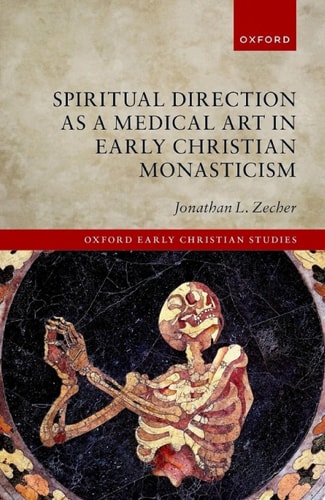
Spiritual Direction as a Medical Art in Early Christian Monasticism
0
0
As an Amazon Associate and affiliate partner, Menrva Books earns from qualifying purchases. Learn more
Author Description
What expectations did the women and men living in early monastic communities carry into relationships of obedience and advice? What did they hope to achieve through confession and discipline? To explore these questions, this study shows how several early Christian writers applied the logic, knowledge, and practices of Galenic medicine to develop their own practices of spiritual direction. Evagrius reads dream images as diagnostic indicators of the soul's state. John Cassian crafts a nosology of the soul using lists of passions while diagnosing the causes of wet dreams. Basil of Caesarea pits the spiritual director against the physician in a competition over diagnostic expertise. John Climacus crafts pathologies of passions through demonic family trees, while equipping his spiritual director with a physician's toolkit and imagining the monastic space as a vast clinic. These different appropriations of medical logic and metaphors not only show us the thought-world of late antique monasticism, but they would also have decisive consequences for generations of Christian subjects who would learn to see themselves as sick or well, patients or healers, within monastic communities.
Menrva's Summary
THE THESIS
This study investigates how early Christian monastic writers integrated the logic and practices of Galenic medicine into their frameworks for spiritual direction and soul care. Jonathan L. Zecher, a scholar of late antique Christianity, utilizes primary source texts from figures such as Evagrius, John Cassian, Basil of Caesarea, and John Climacus to demonstrate this conceptual synthesis. By analyzing these writings, the author argues that monastic leaders adopted medical metaphors and diagnostic methodologies to categorize human behavior and spiritual health, effectively transforming the monastery into a clinical space for the soul.
THE SCOPE MAP
What You Will Find
- Analysis of Galenic medical influence on early Christian ascetic literature.
- Examination of diagnostic tools used for interpreting dreams, passions, and spiritual states.
- Comparative study of monastic authority figures and their roles as physicians of the soul.
- Historical context regarding the perception of the self as a patient within monastic communities.
Scope Limits
- The study focuses primarily on late antique monasticism and does not extend to modern psychological or medical practices.
- It does not provide a comprehensive history of all early Christian spiritual direction, focusing specifically on the medicalized subset of these practices.
THE AUTHORITY PERSPECTIVE
Scholars and historians of late antiquity recognize this work as a significant contribution to understanding the intersection of ancient medicine and ascetic theology. Readers frequently note the academic density of the prose and the meticulous use of primary sources to support the author's central argument.
Page Count:
336
Publication Date:
2022-01-01
Publisher:
OUP Oxford
ISBN-10:
0192595997
ISBN-13:
9780192595997
History
Ancient History
Theology
Monasticism
Christianity
MEDICAL History
Community Tags
Other Editions(3)


Similar Books