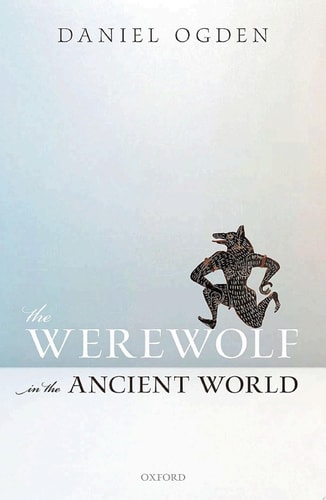
The Werewolf in the Ancient World
0
0
As an Amazon Associate and affiliate partner, Menrva Books earns from qualifying purchases. Learn more
Author Description
In a moonlit graveyard somewhere in southern Italy, a soldier removes his clothes in readiness to transform himself into a wolf. He depends upon the clothes to recover his human shape, and so he magically turns them to stone, but his secret is revealed when, back in human form, he is seen to carry a wound identical to that recently dealt to a marauding wolf. In Arcadia a man named Damarchus accidentally tastes the flesh of a human sacrifice and is transformed into a wolf for nine years. At Temesa Polites is stoned to death for raping a local girl, only to return to terrorize the people of the city in the form of a demon in a wolfskin. Tales of the werewolf are by now well established as a rich sub-strand of the popular horror genre; less widely known is just how far back in time their provenance lies. These are just some of the werewolf tales that survive from the Graeco-Roman world, and this is the first book in any language to be devoted to their study. It shows how in antiquity werewolves thrived in a story-world shared by witches, ghosts, demons, and soul-flyers, and argues for the primary role of story-telling-as opposed to rites of passage-in the ancient world's general conceptualization of the werewolf. It also seeks to demonstrate how the comparison of equally intriguing medieval tales can be used to fill in gaps in our knowledge of werewolf stories in the ancient world, thereby shedding new light on the origins of the modern phenomenon. All ancient texts bearing upon the subject have been integrated into the discussion in new English translations, so that the book provides not only an accessible overview for a broad readership of all levels of familiarity with ancient languages, but also a comprehensive sourcebook for the ancient werewolf for the purposes of research and study.
Menrva's Summary
THE THESIS
This book investigates the origins and conceptualization of the werewolf figure within the cultural and literary framework of the Graeco-Roman world. Daniel Ogden, a scholar of ancient history, utilizes a comprehensive collection of primary source texts to argue that the ancient werewolf was primarily a product of storytelling traditions rather than a byproduct of specific rites of passage. By integrating these ancient accounts with medieval comparative material, the author constructs a framework for understanding how these creatures functioned alongside other supernatural entities like witches and demons.
THE SCOPE MAP
What You Will Find
- A collection of ancient werewolf narratives from Graeco-Roman sources.
- New English translations of all relevant primary texts concerning ancient lycanthropy.
- Comparative analysis between ancient and medieval werewolf folklore.
- An exploration of the werewolf's relationship to other supernatural figures such as ghosts and soul-flyers.
Scope Limits
- The study focuses primarily on the Graeco-Roman world and does not provide an exhaustive global history of lycanthropy.
- The analysis prioritizes literary and cultural evidence over biological or psychological interpretations of the phenomenon.
THE AUTHORITY PERSPECTIVE
Scholars and students of classical history recognize this work as a foundational sourcebook for the study of ancient supernatural folklore. Readers frequently note the accessibility of the translations while appreciating the academic rigor applied to the analysis of these ancient texts.
Page Count:
279
Publication Date:
2021-01-01
Publisher:
OUP Oxford
ISBN-10:
0192596292
ISBN-13:
9780192596291
History
Body Mind Spirit
Mythology
Cultural History
Ancient History
Folklore