Prostitution and Subjectivity in Late Medieval Germany
0
0
As an Amazon Associate and affiliate partner, Menrva Books earns from qualifying purchases. Learn more
Author Description
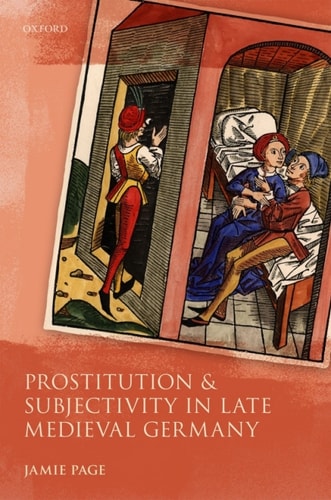
Prostitution played an important part in structuring gender relations in medieval Germany. Prostitutes were often viewed as an example of the extreme female sinfulness which all women risked falling into, yet their social role was also seen as vital to the unmarried men for whom they provided a sexual outlet. Prostitution and Subjectivity in Late Medieval Germany is the first full-length study of medieval prostitution to focus primarily on how gender discourse shaped the lives of prostitutes themselves. Based on three legal case studies from the late medieval Empire, Prostitutes and Subjectivity in Late Medieval Germany examines constructions of subjectivity between 1400 and 1500. This period saw the rapid rise of tolerated prostitution across much of western Europe and the emergence of the public brothel as a central institution in the regulation of social order, followed by its equally rapid suppression from the early 1500s. By analysing how individuals interacted with cultural discourses surrounding the body, sexuality, and sin, the book explores how the concepts which defined prostitution in the Middle Ages shaped individual lives, and how individuals were able - or not - to exert agency, both within the circumstances of their own lives, and in response to official attempts to regulate sexual behaviour.
Menrva's Summary
THE THESIS
This book investigates how gender discourse and cultural constructions of sin shaped the subjectivity and agency of prostitutes in late medieval Germany. Author Jamie Page utilizes legal case studies from the 15th-century Empire to analyze the intersection of institutional regulation and individual experience. The work argues that while prostitution was framed as a necessary social outlet for unmarried men, the women involved navigated complex, often restrictive, cultural definitions of the female body and morality.
THE SCOPE MAP
What You Will Find
- Analysis of three specific legal case studies from the late medieval Empire.
- Examination of the rise and subsequent suppression of public brothels between 1400 and 1500.
- Theoretical framework regarding the construction of subjectivity and agency within medieval social orders.
Scope Limits
- The study is geographically limited to the late medieval German Empire.
- The research focuses primarily on legal and cultural discourse rather than broad economic statistics of the sex trade.
THE AUTHORITY PERSPECTIVE
Scholars in the field of medieval gender history identify this work as a significant contribution to the study of marginalized populations and institutional regulation. Readers frequently note the academic density of the prose and the author's rigorous application of discourse analysis to primary legal sources.
Page Count:
176
Publication Date:
2021-01-01
Publisher:
OUP Oxford
ISBN-10:
0192607561
ISBN-13:
9780192607560
History
Sociology
Gender Studies
European History
German history
Social History
Community Tags
Other Editions(3)
Similar Books