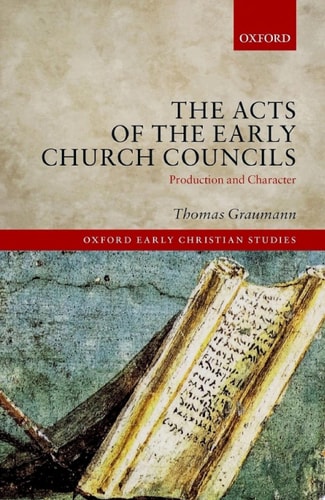
The Acts of the Early Church Councils: Production and Character
0
0
As an Amazon Associate and affiliate partner, Menrva Books earns from qualifying purchases. Learn more
Author Description
The Acts of Early Church Councils Acts examines the acts of ancient church councils as the objects of textual practices, in their editorial shaping, and in their material conditions. It traces the processes of their production, starting from the recording of spoken interventions during a meeting, to the preparation of minutes of individual sessions, to their collection into larger units, their storage and the earliest attempts at their dissemination. Thomas Graumann demonstrates that the preparation of 'paperwork' is central for the bishops' self-presentation and the projection of prevailing conciliar ideologies. The councils' aspirations to legitimacy and authority before real and imagined audiences of the wider church and the empire, and for posterity, fundamentally reside in the relevant textual and bureaucratic processes. Council leaders and administrators also scrutinized and inspected documents and records of previous occasions. From the evidence of such examinations the volume further reconstructs the textual and physical characteristics of ancient conciliar documents and explores the criteria of their assessment. Reading strategies prompted by the features observed from material textual objects handled in council, and the opportunities and limits afforded by the techniques of 'writing-up' conciliar business are analysed. Papyrological evidence and contemporary legal regulations are used to contextualise these efforts. The book thus offers a unique assessment of the production processes, character and the material conditions of council acts that must be the foundation for any historical and theological research into the councils of the ancient church.
Menrva's Summary
THE THESIS
This work investigates how the production, editorial shaping, and material conditions of ancient church council acts served as instruments for establishing ecclesiastical authority and conciliar ideology. Thomas Graumann, a scholar specializing in early Christian history, utilizes a combination of papyrological evidence, legal regulations, and textual analysis to reconstruct the bureaucratic processes behind these documents. He argues that the creation of 'paperwork' was not merely administrative but a deliberate strategy for bishops to project legitimacy to both contemporary and future audiences.
THE SCOPE MAP
What You Will Find
- Analysis of the transition from spoken interventions to formal written minutes.
- Examination of the storage, collection, and dissemination practices of conciliar records.
- Application of papyrological and legal frameworks to understand ancient document management.
Scope Limits
- The study focuses primarily on the material and procedural aspects of the documents rather than a theological analysis of the council decrees themselves.
THE AUTHORITY PERSPECTIVE
Scholars in the field of early Christian studies recognize this volume as a foundational text for understanding the bureaucratic mechanics of the ancient church. Readers frequently note the academic density of the prose and the meticulous attention to the physical characteristics of the surviving manuscripts.
Page Count:
432
Publication Date:
2021-01-01
Publisher:
OUP Oxford
ISBN-10:
0192638556
ISBN-13:
9780192638557
History
Religion
Theology
Historiography
Church History
Ancient History
Christianity