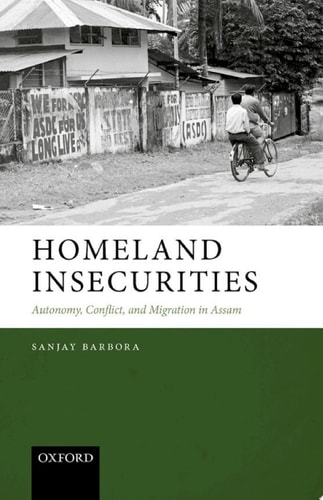
Homeland Insecurities: Autonomy, Conflict, and Migration in Assam
0
0
As an Amazon Associate and affiliate partner, Menrva Books earns from qualifying purchases. Learn more
Author Description
'Homeland Insecurities' engages with the impact of counterinsurgency, migration, and conflicts arising out of demands for autonomy in Assam, Northeast India. It asks three sets of related questions: (a) what are the origins of demands for ethnic homelands? (b) why does migration continue to be such an overarching oeuvre in political discourse in Assam and how does one engage with new forms of mobility? (c) how does a society recover from counterinsurgency and what are the new forms of militarisation that are emerging in the present? Working on the main argument that demands for autonomy and social justice have been central themes that have been historically articulated in Assam, it shows the tensions that arise in explanations about causes of conflict in the state. These tensions, I argue, are best understood through a critical engagement with everyday politics of organisations and individuals working on the ground. Although there is a general tendency to read conflict in Assam through the lenses of ethnicity and development, nevertheless there is evidence to show that affect offers an additional analytical tool because of its ability to offer a layered, sometimes paradoxical account of events and situations that cause conflicts in the region.
Menrva's Summary
THE THESIS
This book investigates the complex intersections of counterinsurgency, migration, and autonomy movements in Assam, Northeast India. Sanjay Barbora, a scholar specializing in the region, utilizes a framework grounded in the everyday politics of local organizations and individuals to challenge dominant narratives. He argues that while ethnicity and development are common lenses for viewing Assamese conflict, an analysis of affect provides a more nuanced understanding of the paradoxical nature of regional instability and social recovery.
THE SCOPE MAP
What You Will Find
- Historical analysis of ethnic homeland demands in Assam
- Examination of migration patterns and their role in political discourse
- Assessment of post-conflict recovery and contemporary militarization
- Application of affect theory to political and social conflict
Scope Limits
- Does not provide a comprehensive history of all ethnic groups in Northeast India
- Does not offer a prescriptive policy manual for conflict resolution
THE AUTHORITY PERSPECTIVE
Scholars and regional experts recognize this work as a significant contribution to the study of Northeast Indian politics, particularly for its departure from traditional ethnic-centric analysis. Readers frequently note the academic density of the prose, which is best suited for those familiar with post-colonial theory and regional political history.
Page Count:
512
Publication Date:
2022-01-01
Publisher:
OUP Oxford
ISBN-10:
0192667629
ISBN-13:
9780192667625
History
Sociology
Public Policy
Conflict Studies
Migration Studies
Asia history
South Asia
India
Community Tags
Similar Books