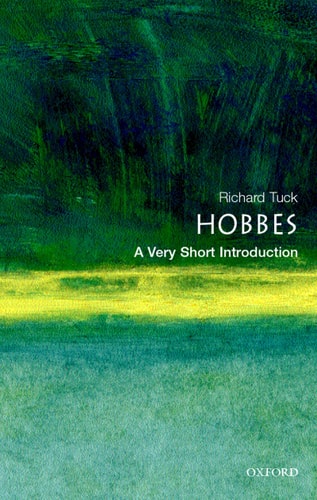
Hobbes: A Very Short Introduction
0
0
As an Amazon Associate and affiliate partner, Menrva Books earns from qualifying purchases. Learn more
Author Description
Thomas Hobbes (1588-1679) was the first great English political philosopher, and his book Leviathan was one of the first truly modern works of philosophy. Richard Tuck shows that while Hobbes may indeed have been an atheist, he was far from pessimistic about human nature, nor did he advocate totalitarianism. By locating him against the context of his age, we learn that Hobbes developed a theory of knowledge which rivaled that of Descartes in its importance for the formation of modern philosophy.
Menrva's Summary
THE THESIS
This book investigates the foundational contributions of Thomas Hobbes to modern political philosophy and epistemology. Richard Tuck, a scholar of political thought, utilizes historical context to challenge common misconceptions regarding Hobbes's views on human nature and governance. By situating Hobbes within the intellectual climate of the seventeenth century, the text argues that his work represents a sophisticated alternative to Cartesian philosophy rather than a simple defense of authoritarianism.
THE SCOPE MAP
What You Will Find
- Analysis of the political and social climate of 17th-century England
- Examination of Hobbes's major work, Leviathan
- Comparison between Hobbesian theory and Cartesian epistemology
- Re-evaluation of Hobbes's stance on atheism and human nature
Scope Limits
- Does not provide a comprehensive biography of Hobbes's personal life
- Does not offer an exhaustive critique of all subsequent political theory
THE AUTHORITY PERSPECTIVE
Experts recognize this text as a concise and accessible entry point for students of political philosophy. Readers frequently note that the prose is dense with historical detail, making it a reliable resource for those seeking to understand Hobbes beyond popular caricatures.
Page Count:
144
Publication Date:
2002-08-29
Publisher:
Oxford University Press
ISBN-10:
0192802550
ISBN-13:
9780192802552
History
Biography
Philosophy
Intellectual History
Community Tags
Other Editions(3)
Similar Books