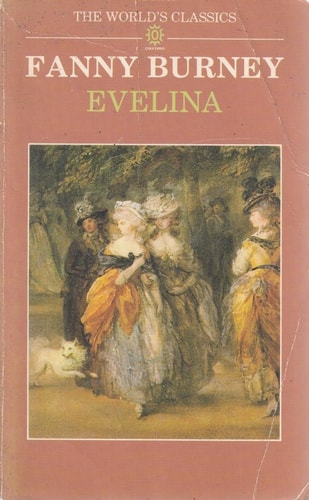
Evelina
0
0
As an Amazon Associate and affiliate partner, Menrva Books earns from qualifying purchases. Learn more
Author Description
Evelina, the first and best of Fanny Burney's novels, tells the story of a young girl, fresh from the provinces, whose initiation into the ways of the world is frequently painful, though it leads to self-discovery, moral growth, and, finally, happiness. Hilarious comedy and moral gravity make the novel a fund of entertainment and wisdom. Out of the graceful shifts from the idyllic to the near-tragic and realistic, Evalina emerges as a fully realized character. And out of its treatment of contrasts — the peace of the countryside and the cultured and social excitement of London and Bristol, the crowd of life-like vulgarians and elegant gentry — the novel reveals superbly the life and temper of eighteenth-century England, as seen though the curiosity of its young heroine.Edward A. Bloom has edited the text from the rare first edition of 1778 [from the copy in the Bodleian Library of Oxford University].
Menrva's Summary
THE PULSE
A young woman from the countryside enters the complex social hierarchies of eighteenth-century London, where she must navigate the pitfalls of reputation and class to secure her future. Evelina Anville, a young woman of unknown parentage, is thrust into the high-stakes social circles of London and Bristol. Her objective is to establish her identity and find her place in society while contending with the unwanted advances of suitors, the embarrassment of her vulgar relatives, and the rigid expectations of the gentry. The narrative is presented through an epistolary framework, primarily consisting of letters written by Evelina to her guardian, Mr. Villars, which provides an intimate view of her internal development and external observations.
INSIDE THE PAGES
- Epistolary narrative structure composed of personal letters
- Satirical depiction of 18th-century social manners and etiquette
- Contrast between rural innocence and urban corruption
- Development of a female protagonist navigating class barriers
- Exploration of the tension between individual desire and social duty
- Use of comedic archetypes to critique aristocratic behavior
- Detailed observation of 18th-century British social customs
- Focus on the moral education of a young woman
THE COLLECTIVE ECHO
Readers and critics frequently highlight the novel's significance as a precursor to the domestic realism of Jane Austen. Discussion often centers on the effectiveness of the epistolary format in capturing the protagonist's evolving voice and social awareness. Many observers note the sharp contrast between the comedic, often grotesque, portrayals of the lower classes and the refined, yet often cold, behavior of the gentry. The balance between lighthearted social satire and the serious moral dilemmas faced by the heroine remains a primary point of interest for scholars. Readers often appreciate the vivid, authentic atmosphere of 18th-century England that the text successfully constructs.
Page Count:
478
Publication Date:
1982-08-26
Publisher:
Oxford University Press
ISBN-10:
0192815962
ISBN-13:
9780192815965
Satire
Coming of Age
18th century
Classic Literature
Epistolary
England
Social Commentary
Community Tags
Other Editions(9)




Similar Books






Reader Comments
Share Your Thoughts
No comments yet. Be the first to share your thoughts!