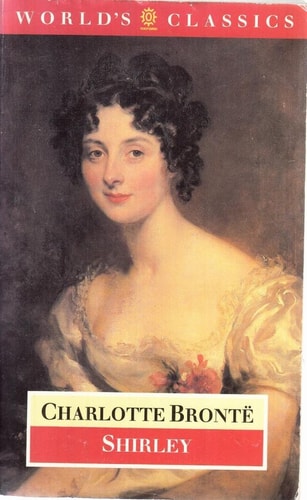
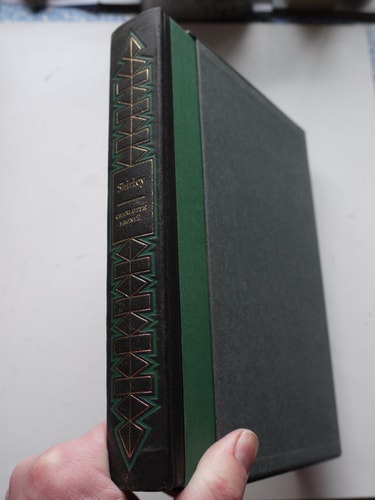
Shirley
0
0
As an Amazon Associate and affiliate partner, Menrva Books earns from qualifying purchases. Learn more
Author Description
'Something real, cool, and solid, lies before you; something unromantic as Monday morning'Following the dramatic romance of Jane Eyre, Charlotte Brontë intended Shirley to be a 'salutary' change. Set in Yorkshire during the period of the Napoleonic wars, the novel articulates the social realities of economic hardship, the Luddite riots, dissatisfaction with the government and an inadequate Church.In the foreground of these concerns, a mill-owner, Robert Moore, in pursuit of financial security, ignores the suffering of his workers to such an extent that an attempt is made on his life. At the same time he affects the lives of two women--the shy Caroline Helstone, who loves him, and the wealthy, vivacious Shirley, who contemptuously rejects his self-seeking offer of marriage. In her portrayal of the personalities of these two young women, Charlotte Brontë displays the sensitive perception of one of the greatest writers in English literature.
Menrva's Summary
THE PULSE
The arrival of industrial unrest in Yorkshire forces a mill-owner to confront the consequences of his economic choices while two distinct women navigate the constraints of their social standing. Robert Moore, a mill-owner, prioritizes financial survival during the Napoleonic wars, inadvertently inciting the wrath of his workers and complicating his relationships with the women in his orbit. Caroline Helstone, a reserved woman, finds her affections for Moore tested by his cold pragmatism, while the independent Shirley Keeldar challenges his assumptions about marriage and status. The narrative employs a third-person perspective to examine the intersection of personal desire and the broader socio-economic instability of the early nineteenth century.
INSIDE THE PAGES
- Examination of the Luddite riots and industrial conflict
- Exploration of gender roles in nineteenth-century England
- Critique of the established Church and government policy
- Contrast between the characters of Caroline Helstone and Shirley Keeldar
- Depiction of economic hardship during the Napoleonic wars
- Focus on the psychological motivations of a mill-owner
- Use of regional Yorkshire settings to ground the narrative
- Analysis of marriage as a social and financial contract
THE COLLECTIVE ECHO
Readers and critics often observe that this work represents a departure from the gothic intensity of the author's previous output, favoring a broader social scope. Discussion frequently centers on the contrast between the two female leads, whose differing temperaments provide a lens through which the author critiques contemporary gender expectations. Many commentators highlight the meticulous attention to the political and economic climate of the period, noting that the narrative balances personal drama with historical context. While some readers find the pacing slower than other works by the same author, the depth of characterization and the sharp social commentary remain consistent points of interest for those examining the evolution of the Victorian novel.
Page Count:
718
Publication Date:
1983-09-15
Publisher:
Oxford University Press
ISBN-10:
0192815628
ISBN-13:
9780192815620
Romance
Social Realism
classic
Historical
England
Victorian
Community Tags
Other Editions(6)
Similar Books










Reader Comments
Share Your Thoughts
No comments yet. Be the first to share your thoughts!