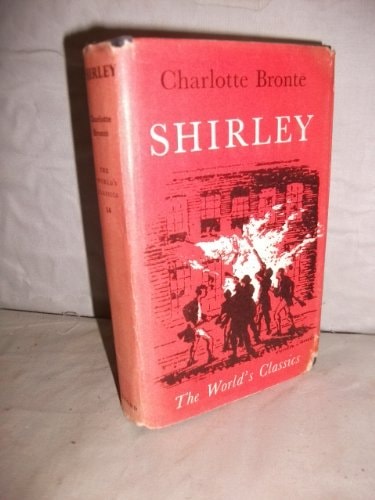
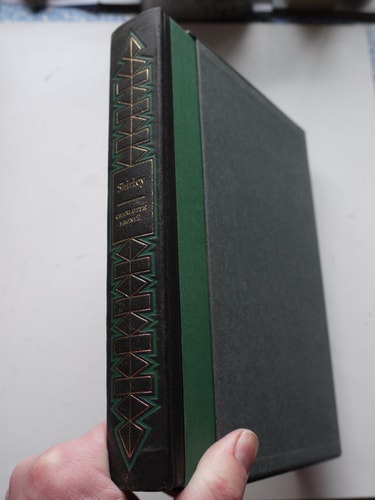
Shirley
0
0
As an Amazon Associate and affiliate partner, Menrva Books earns from qualifying purchases. Learn more
Author Description
Following the tremendous popular success of Jane Eyre, which earned her lifelong notoriety as a moral revolutionary, Charlotte Brontë vowed to write a sweeping social chronicle that focused on "something real and unromantic as Monday morning." Set in the industrializing England of the Napoleonic wars and Luddite revolts of 1811-12, Shirley (1849) is the story of two contrasting heroines. One is the shy Caroline Helstone, who is trapped in the oppressive atmosphere of a Yorkshire rectory and whose bare life symbolizes the plight of single women in the nineteenth century. The other is the vivacious Shirley Keeldar, who inherits a local estate and whose wealth liberates her from convention.A work that combines social commentary with the more private preoccupations of Jane Eyre, Shirley demonstrates the full range of Brontë's literary talent. "Shirley is a revolutionary novel," wrote Brontë biographer Lyndall Gordon. "Shirley follows Jane Eyre as a new exemplar but so much a forerunner of the feminist of the later twentieth century that it is hard to believe in her actual existence in 1811-12. She is a theoretic what a woman might be if she combined independence and means of her own with intellect. Charlotte Brontë imagined a new form of power, equal to that of men, in a confident young woman [whose] extraordinary freedom has accustomed her to think for herself....Shirley [is] Brontë's most feminist novel."
Menrva's Summary
THE PULSE
Set against the backdrop of the Luddite uprisings in 1811, the narrative explores the intersecting lives of two women navigating the rigid social structures of industrializing Yorkshire. Caroline Helstone, confined by the expectations of her rectory life, seeks purpose and autonomy, while the wealthy heiress Shirley Keeldar challenges traditional gender roles through her financial independence. The novel employs a third-person perspective to examine the economic tensions of the Napoleonic era alongside the personal struggles of its protagonists. As the industrial conflict threatens the local textile mills, the characters must reconcile their individual desires with the shifting political and social landscape of their time.
INSIDE THE PAGES
- Exploration of the Luddite labor revolts
- Contrast between domestic confinement and financial independence
- Critique of nineteenth-century gender roles
- Detailed depiction of Yorkshire industrial society
- Examination of the economic impact of the Napoleonic Wars
- Character-driven social commentary
- Focus on the plight of single women
- Integration of historical events with personal narrative
THE COLLECTIVE ECHO
Readers and critics frequently identify this work as a significant departure from the intense, singular focus of the author's previous novels. Discussion often centers on the balance between the expansive social chronicle of the textile industry and the intimate, character-focused development of the two heroines. Many observers highlight the novel's forward-thinking portrayal of female independence, noting how it anticipates later feminist discourse. The pacing is often described as deliberate, reflecting the complex interplay between historical context and personal agency. Scholars emphasize the text's value as a document of nineteenth-century social friction and its role in expanding the scope of the author's literary output.
Page Count:
570
Publication Date:
2005-07-12
Publisher:
Oxford University Press
ISBN-10:
0192500147
ISBN-13:
9780192500144
Victorian
Social Commentary
Classic Literature
Feminist
Historical
Community Tags
Other Editions(6)
Similar Books












Reader Comments
Share Your Thoughts
No comments yet. Be the first to share your thoughts!