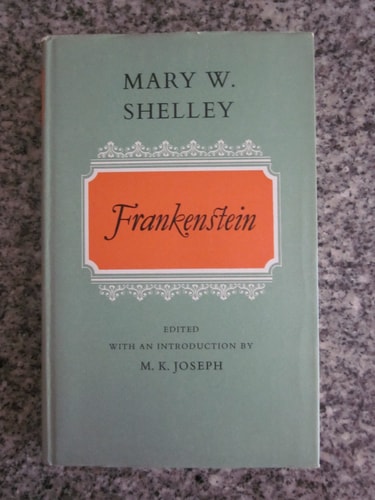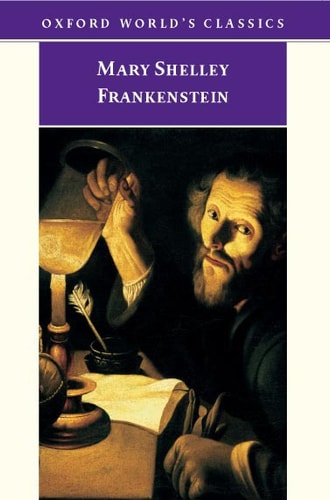
Frankenstein: The 1818 Text
0
0
As an Amazon Associate and affiliate partner, Menrva Books earns from qualifying purchases. Learn more
Author Description
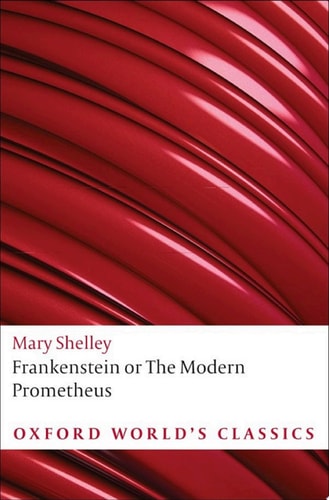
Shelley's enduringly popular and rich gothic tale confronts some of the most feared innovations of evolutionism and science--topics such as degeneracy, hereditary disease, and humankind's ability to act as creator of the modern world. This new edition, based on the harder and wittier 1818 version of the text, draws on new research and examines the novel in the context of the controversial radical sciences developing in the years following the Napoleonic Wars, and shows the relationship of Frankenstein's experiment to the contemporary debate between champions of materialistic science and proponents of received religion.
Menrva's Summary
THE PULSE
Victor Frankenstein succeeds in animating a creature composed of scavenged human remains, only to be horrified by his creation and abandon it to a hostile world. Driven by an obsessive desire to conquer death and unlock the secrets of life, Frankenstein violates natural laws, setting in motion a chain of events that destroys his personal life and those he holds dear. The creature, initially benevolent and seeking connection, is forced into a cycle of violence and vengeance due to the rejection he faces from humanity. The narrative utilizes an epistolary framework, primarily told through the letters of Robert Walton and the subsequent testimonies of Frankenstein and his creation, creating a layered, non-linear perspective on the events.
INSIDE THE PAGES
- Epistolary structure utilizing letters and nested narratives
- Exploration of the ethics of scientific ambition and creation
- Gothic atmosphere characterized by isolation and sublime landscapes
- Themes of parental abandonment and social alienation
- Philosophical dialogue regarding the nature of humanity and morality
- Contrast between the creator's hubris and the creature's intellectual development
- Use of Romantic-era literary tropes and language
- Examination of the consequences of unchecked intellectual pursuit
THE COLLECTIVE ECHO
Discussion often centers on the moral ambiguity of both the creator and the creation, with readers frequently debating who bears the ultimate responsibility for the ensuing tragedy. Critics highlight the text's effectiveness in grounding speculative scientific concepts within the emotional turmoil of its characters. The atmospheric prose is frequently noted for its ability to evoke the isolation of the Arctic and the internal desolation of the protagonist. Readers often emphasize how the 1818 version provides a sharper, more aggressive critique of the Enlightenment ideals compared to later revisions. The work remains a focal point for academic analysis regarding the intersection of science, religion, and the definition of the human soul.
Page Count:
328
Publication Date:
1998-06-25
Publisher:
Oxford University Press
ISBN-10:
0192833669
ISBN-13:
9780192833662
Horror
Science Fiction
classic
Fiction - Horror
Philosophical
Scientists fiction
Frankenstein fictitious character fiction
Gothic