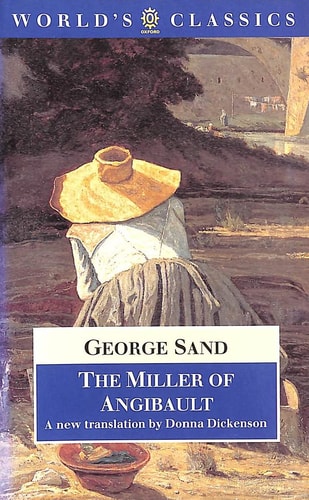
The Miller of Angibault
0
0
As an Amazon Associate and affiliate partner, Menrva Books earns from qualifying purchases. Learn more
Author Description
The Miller of Angibault (1845) is George Sand's `arch-socialist' novel, according to the writer herself. Rejected by its original publisher as too violent an attack on property, it actually satirizes the utopian ideals of Paris reformers who try to put their naive plans into action among the country folk of Sand's native Berry. The Miller of Angibault reflects both the ebullient political movements of its period and the despairing conviction that the Revolution of 1789 had changed nothing. This is a new translation which fully captures Sand's self-effacing humour and gentle lyricism.
Menrva's Summary
THE PULSE
The arrival of Parisian reformers in the rural landscape of Berry triggers a collision between idealistic political theory and the entrenched realities of provincial life. The protagonist, a miller, finds his traditional existence disrupted by the arrival of outsiders who seek to impose utopian social structures upon the local community. These reformers face significant logical and physical resistance from the land itself and the skepticism of the country folk who view their abstract plans with suspicion. The narrative framework utilizes a third-person perspective to observe the friction between urban intellectualism and the practical, often harsh, conditions of rural existence.
INSIDE THE PAGES
- Satirical examination of utopian political movements
- Detailed depiction of the Berry region in 19th-century France
- Exploration of property rights and social class dynamics
- Contrast between urban idealism and rural pragmatism
- Integration of self-effacing humor within the narrative voice
- Lyrical descriptions of the natural environment
- Critique of the lingering effects of the French Revolution
- Character-driven conflict regarding social reform
THE COLLECTIVE ECHO
Readers and critics frequently note the novel's function as a bridge between Sand's political activism and her literary output. Discussion often centers on the balance between the author's socialist intent and the satirical portrayal of those who attempt to implement such ideals. Observers highlight the effectiveness of the rural setting in grounding the abstract political debates of the period. The work is often cited for its gentle tone, which contrasts sharply with the radical nature of the social critiques presented within the text. Readers interested in the intersection of 19th-century political thought and regional fiction find this work to be a significant entry in the author's bibliography.
Page Count:
352
Publication Date:
1995-06-01
Publisher:
Oxford University Press
ISBN-10:
0192830848
ISBN-13:
9780192830845
Political fiction
French literature
France fiction
classic
Socialist Fiction
19th Century
Community Tags
Other Editions(9)







Similar Books













Reader Comments
Share Your Thoughts
No comments yet. Be the first to share your thoughts!