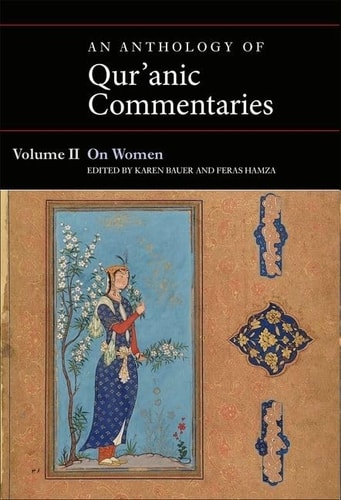
An Anthology of Qur'anic Commentaries, Volume II: On Women
0
0
As an Amazon Associate and affiliate partner, Menrva Books earns from qualifying purchases. Learn more
Author Description
Building on the success of Anthology, Volume I: On the Nature of the Divine, this second volume in the series focuses on a critical and contentious theme: Women in the Qurʾan and traditional Qurʾanic commentaries. It comprises analysis of the female subject in the Qurʾan, annotated translations of Qurʾanic commentaries spanning twelve centuries, interviews of contemporary Muslim scholars and extensive introductory materials, which frame the work throughout and render these technically complex materials accessible to the reader. On Women begins with a critical introduction to the study of women and gender in the genre of Qurʾanic commentaries. A unique prolegomenon then follows key Qurʾanic terms in a chronological sequence, showing how the Qurʾan's world view on women developed from the earliest Meccan revelations, when women were addressed only implicitly as a part of households or in the course of anti-pagan polemic, to the period of the final revelations in Medina, when women were addressed directly as pious and social subjects. The remainder of the volume translates, critically annotates, and analyses interpretations of six select Qurʾanic verses on women. These verses, chosen because of their relevance to women's lived experience, speak of the creation of humankind beginning with a single soul (Q. 4:1); the exemplary figure of Mary, the mother of Jesus (Q. 3:35-6); women's status in marriage (Q. 4:34); women's legal testimony and hence legal capacity (Q. 2:282); and 'veiling' as it relates to Qurʾanic norms of modesty (Q. 24:31). While highlighting variation, continuity, and plurality in the genre of Qurʾanic commentaries, Volume II goes beyond medieval interpretive paradigms to include perspectives marginalised by that tradition, such as the voices of women themselves.
Menrva's Summary
THE THESIS
This volume investigates the historical and theological evolution of gender roles within the Qur'an and the subsequent twelve centuries of traditional Islamic commentary. Dr. Feras Hamza and Dr. Karen Bauer utilize a combination of chronological textual analysis, annotated translations, and contemporary scholarly interviews to map how interpretations of female subjects have shifted from early Meccan revelations to later Medinan contexts. The authors provide a rigorous framework that balances classical exegetical traditions with modern perspectives to address the complexities of gender in Islamic law and social practice.
THE SCOPE MAP
What You Will Find
- Chronological analysis of Qur'anic terms regarding women from Meccan to Medinan periods.
- Annotated translations of six primary Qur'anic verses concerning marriage, testimony, and modesty.
- Interviews with contemporary Muslim scholars regarding the interpretation of gendered texts.
- A critical prolegomenon detailing the development of the female subject in traditional commentary.
Scope Limits
- The analysis is restricted to six specific Qur'anic verses rather than an exhaustive survey of all gender-related passages.
- The work focuses primarily on the genre of traditional Qur'anic commentary rather than broader sociological studies of modern Muslim communities.
THE AUTHORITY PERSPECTIVE
Scholars and students of Islamic studies frequently identify this work as a significant resource for understanding the plurality and continuity of traditional exegesis. Experts highlight the text's ability to render complex theological arguments accessible while maintaining a high level of academic rigor in its historical contextualization.
Page Count:
752
Publication Date:
2022-01-25
Publisher:
Oxford University Press
ISBN-10:
0192842854
ISBN-13:
9780192842855
Religion
History
Theology
Islam
Gender Studies
Community Tags
Similar Books