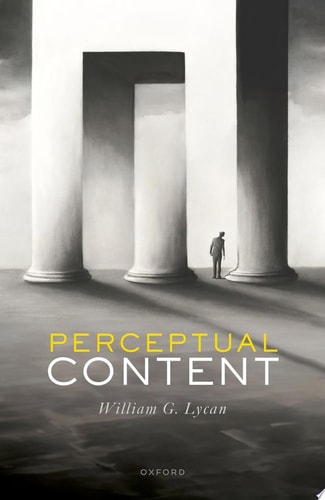
Perceptual Content
0
0
As an Amazon Associate and affiliate partner, Menrva Books earns from qualifying purchases. Learn more
Author Description
Cover -- Perceptual Content -- Copyright -- Dedication -- Contents -- Preface And Acknowledgments -- Introduction -- Part I: Representation By The Chemical Senses -- 1: The Intentionality Of Smell -- 1. The Case Against -- 2. Rebuttal -- 3. The Thesis -- 4. The Case For -- 5. What Does It Represent? -- 6. What About The Environmental Objects? -- 2: What Does Taste Represent? -- 1. Taste Vs Flavor -- 2. The Problem Of Representing Intensity/concentration -- 3. Taste And The Person -- 4. Reconsidering Representing -- 5. Conclusion -- Afterword On Consciousness -- Part Ii: Layering 3: Introduction To Perceptual Layering -- 1. The Trees -- 2. The Bottom Layer -- 4: What Does Vision Represent? -- 1. Conservative Views Vs Liberal -- 2. Intractability Of The Dispute -- 3. Denying The Presupposition -- 4. Siegel's Method -- 5. More Substantive Objections To Siegel's Method -- 6. Layering -- 7. Aspect Perception Vs Layering -- 5: What Is It We Touch? -- 1. Ways In Which Touch Differs -- 2. Individuating The Senses -- 3. Commonsense Objects Of Touch -- 4. What Touch Represents: Preliminaries -- 5. What Touch Represents -- 6. Heat And Cold 7. Tactual Consciousness And Experience -- Part Iii: Beyond Layering -- 6: Complications -- 1. Ecologism -- 2. Two Problems -- 3. Interlude: Apologetic Recantation -- 4. Perceptual Vs Cognitive -- 5. Inference And Concepts -- 6. Limits On Distal Layering -- 7. Ordinary Language Vs Layering -- 8. Psychosemantics -- 7: Multimodality -- 1. Smell, Taste, And Flavor -- 2. Two Other Examples -- 3. Proprioception -- 4. A General Question About Multimodality And Consciousness -- 5. Summing Up -- Part Iv: Aspect Perception -- 8: Philosophy And The Duck-rabbit -- 1. The Puzzle 2. Received Wisdom From Wittgenstein, And Some Hope -- 3. Interlude: Aspect Perception And The Representational Theory -- 4. Getting Away From Vision -- 9: Hearing As -- 1. What Audition Represents -- 2. Continuing Assumptions -- 3. Auditory Aspect Perception -- 4. Further Subty
Menrva's Summary
THE THESIS
This work investigates the nature of perceptual content by examining what our senses represent and how that representation is structured across different modalities. William G. Lycan, a prominent philosopher of mind, utilizes a representationalist framework to analyze the intentionality of sensory experience. He argues for a layered model of perception, challenging traditional views on how we perceive environmental objects versus sensory qualities.
THE SCOPE MAP
What You Will Find
- Analysis of the chemical senses, specifically smell and taste
- A layered theory of perceptual representation applied to vision and touch
- Examination of multimodality and the integration of sensory inputs
- Discussion of aspect perception and the representational theory of mind
Scope Limits
- The text does not provide a comprehensive neurobiological account of sensory processing
- It focuses primarily on philosophical analysis rather than empirical psychological data
THE AUTHORITY PERSPECTIVE
Experts in the philosophy of mind recognize this text as a significant contribution to the debate on representationalism and sensory intentionality. Readers frequently note the academic density of the prose, which requires a strong background in analytic philosophy to navigate effectively.
Page Count:
176
Publication Date:
2024-06-28
Publisher:
Oxford University Press
ISBN-10:
0192871811
ISBN-13:
9780192871817
Philosophy
Politics
Epistemology
Philosophy of
Cognitive
Perception
Consciousness & Thought
Community Tags
Other Editions(2)

Similar Books




Reader Comments
Share Your Thoughts
No comments yet. Be the first to share your thoughts!