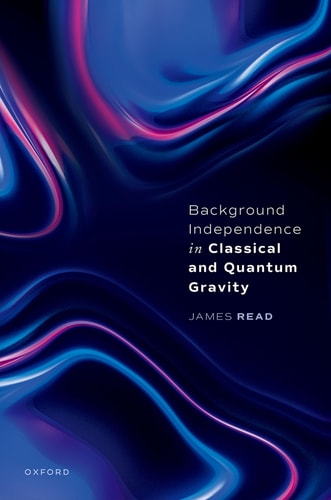
Background Independence in Classical and Quantum Gravity
0
0
As an Amazon Associate and affiliate partner, Menrva Books earns from qualifying purchases. Learn more
Author Description
It is often claimed that Einstein's magnum opus---his 1915 theory of General Relativity---is distinguished from other theories of space and time in virtue of its background independence. It's also often claimed that background independence is an essential feature of any quantum theory of gravity. But are these claims true? This book aspires to offer definitive answers to both of these questions, by (a) charting the space of possible definitions of background independence, and (b) applying said definitions to various classical and quantum theories of gravity. The outcome, in brief, is as follows: General Relativity is not unique by virtue of its background independence (and, indeed, fails to be background independent on some popular definitions); moreover, the situation in the case of quantum theories of gravity is delicate, because (i) there are viable such theories which (by some accounts, at least) fail to be background independent, but also (ii) theories (e.g. perturbative string theory) which have often been dismissed for (allegedly) being background dependent in fact, on many accounts, are better classified as background independent. In giving these answers in rigorous detail, this book seeks to elevate the standards and generality of future discussions of background independence in the foundations of spacetime theories.
Menrva's Summary
THE THESIS
This book investigates whether background independence serves as a defining characteristic of General Relativity and whether it remains a necessary requirement for a viable theory of quantum gravity. Author James S. Read, a scholar in the philosophy of physics, evaluates the conceptual foundations of spacetime theories. By analyzing various definitions of background independence, the text challenges common assumptions regarding the uniqueness of Einstein's theory. The work provides a rigorous framework to assess how different gravitational models align with these definitions, ultimately arguing that the status of background independence is more nuanced than frequently presented in scientific discourse.
THE SCOPE MAP
What You Will Find
- A taxonomy of definitions for background independence in gravitational physics
- Comparative analysis of General Relativity against alternative spacetime theories
- Evaluation of perturbative string theory within the context of background independence
- Logical assessment of quantum gravity models
Scope Limits
- The text does not provide a comprehensive history of all quantum gravity research
- It does not offer a new, unified theory of quantum gravity
THE AUTHORITY PERSPECTIVE
Experts recognize this work as a significant contribution to the philosophy of spacetime, noting its high level of technical and conceptual rigor. Readers frequently highlight the text's utility in clarifying ambiguous terminology that often complicates debates in theoretical physics.
Page Count:
160
Publication Date:
2024-01-01
Publisher:
Oxford University Press
ISBN-10:
0192889117
ISBN-13:
9780192889119
Theoretical Physics
General Relativity
Physics
Philosophy of
Community Tags
Similar Books