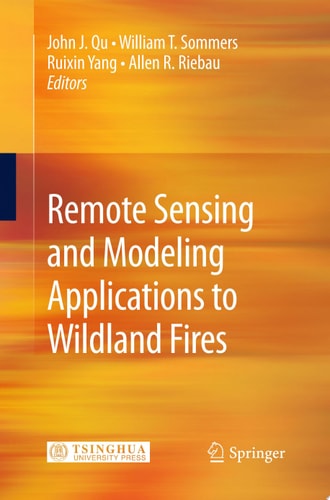
Remote Sensing Modeling and Applications to Wildland Fires
0
0
As an Amazon Associate and affiliate partner, Menrva Books earns from qualifying purchases. Learn more
Author Description
Scientists and managers alike need timely, cost-effective, and technically appropriate fire-related information to develop functional strategies for the diverse fire communities. "Remote Sensing Modeling and Applications to Wildland Fires" addresses wildland fire management needs by presenting discussions that link ecology and the physical sciences from local to regional levels, views on integrated decision support data for policy and decision makers, new technologies and techniques, and future challenges and how remote sensing might help to address them. While creating awareness of wildland fire management and rehabilitation issues, hands-on experience in applying remote sensing and simulation modeling is also shared. This book will be a useful reference work for researchers, practitioners and graduate students in the fields of fire science, remote sensing and modeling applications. Professor John J. Qu works at the Department of Geography and GeoInformation Science at George Mason University (GMU), USA. He is the Founder and Director of the Environmental Science and Technology Center (ESTC) and EastFIRE Lab at GMU.
Menrva's Summary
THE THESIS
This book addresses the critical need for timely and effective wildland fire information by integrating ecological and physical sciences through remote sensing and modeling. Professor John J. Qu, a recognized expert from George Mason University, presents a comprehensive overview of wildland fire management, covering local to regional scales. The work explores integrated decision support data for policy makers, introduces new technologies and techniques, and discusses future challenges in fire management. It aims to raise awareness of fire management and rehabilitation issues while sharing practical experience in applying remote sensing and simulation modeling.
THE SCOPE MAP
- Discussions linking ecology and physical sciences for wildland fire management.
- Views on integrated decision support data for policy and decision makers.
- Introduction to new technologies and techniques in remote sensing for fire applications.
- Exploration of future challenges in wildland fire management and how remote sensing can help.
- Sharing of hands-on experience in applying remote sensing and simulation modeling.
- Applications relevant to both researchers and practitioners in fire science and remote sensing.
THE AUTHORITY PERSPECTIVE
The book is positioned as a valuable reference for researchers, practitioners, and graduate students in fire science, remote sensing, and modeling applications. Its approach of linking ecological and physical sciences, coupled with practical applications, suggests it aims to bridge the gap between scientific understanding and management needs. The inclusion of new technologies and future challenges indicates a forward-looking perspective on addressing complex wildland fire issues. The author's credentials and institutional affiliation lend authority to the presented material.
Page Count:
374
Publication Date:
2014-12-12
Publisher:
Springer Nature
ISBN-10:
3642325300
ISBN-13:
9783642325304
Non-Fiction
Science
Modeling
Fire Science
Remote sensing
Physical Sciences
Ecology
Community Tags
Similar Books