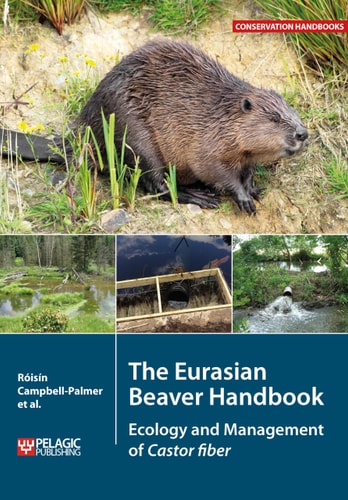
The Eurasian Beaver Handbook: Ecology and Management of Castor Fiber
0
0
As an Amazon Associate and affiliate partner, Menrva Books earns from qualifying purchases. Learn more
Author Description
Beavers are widely recognised as a keystone species which play a pivotal role in riparian ecology. Their tree felling and dam building behaviours coupled with a suite of other activities create a wealth of living opportunities that are exploited by a range of other species. Numerous scientific studies demonstrate that beaver-generated living environments that are much richer in terms of both biodiversity and biomass than wetland environments from which they are absent. Emerging contemporary studies indicate clearly that the landscapes they create can afford sustainable, cost-effective remedies for water retention, flood alleviation, silt and chemical capture. Beaver activities, especially in highly modified environments, may be challenging to certain land use activities and landowners. Many trialled and tested methods to mitigate against these impacts, including a wide range of non-lethal management techniques, are regularly implemented across Europe and North America. Many of these techniques will be new to people, especially in areas where beavers are newly re-establishing. This handbook serves to discuss both the benefits and challenges in living with this species, and collates the wide range of techniques that can be implemented to mitigate any negative impacts. The authors of this handbook are all beaver experts and together they have a broad range of scientific knowledge and practical experience regarding the ecology, captive husbandry, veterinary science, pathology, reintroduction and management of beavers in both continental Europe and Britain.
Menrva's Summary
THE THESIS
This handbook investigates the ecological significance and management strategies for the Eurasian beaver, a keystone species vital to riparian ecosystems. The authors, drawing on extensive scientific knowledge and practical experience, detail the beaver's role in creating biodiverse habitats and offering sustainable solutions for water management, flood alleviation, and pollution control. It also addresses the challenges posed by beaver activities to land use and landowners, presenting a comprehensive overview of mitigation techniques, particularly non-lethal methods, for areas where beavers are re-establishing.
THE SCOPE MAP
- The ecological role of the Eurasian beaver as a keystone species.
- Detailed analysis of beaver behaviors: tree felling and dam building.
- Impact of beaver-generated environments on biodiversity and biomass.
- Emerging studies on sustainable water retention, flood alleviation, and silt/chemical capture.
- Challenges to land use and landowners from beaver activities.
- Trialled and tested methods for mitigating negative impacts, including non-lethal management techniques.
- Practical experience and scientific knowledge from continental Europe and Britain.
THE AUTHORITY PERSPECTIVE
This handbook is presented as an expert resource for understanding and coexisting with the Eurasian beaver. It aims to educate readers on both the ecological benefits and the practical challenges associated with beaver populations, offering a collation of management techniques. The authors' combined expertise in ecology, husbandry, veterinary science, and reintroduction suggests a thorough and practical approach to the subject matter. The content is likely to be of significant interest to conservationists, land managers, and policymakers involved in wildlife management and habitat restoration.
Page Count:
202
Publication Date:
2016-01-01
Publisher:
Pelagic Publishing
ISBN-10:
1784271136
ISBN-13:
9781784271138
Science
Non-Fiction
Ecology
Zoology
Conservation
Community Tags
Similar Books