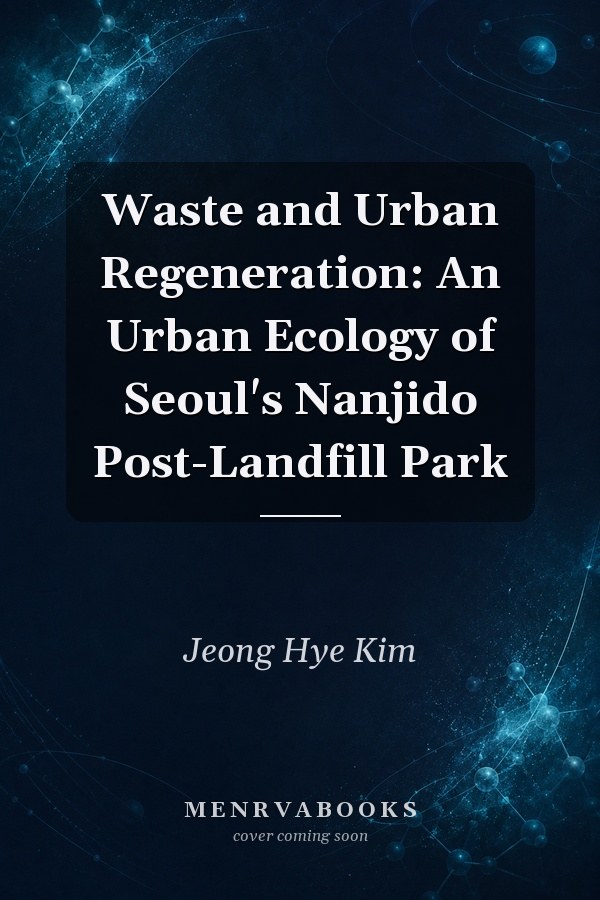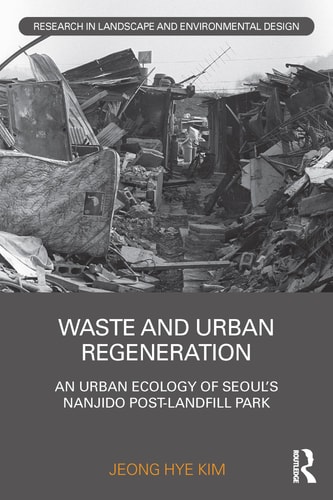
Waste and Urban Regeneration: An Urban Ecology of Seoul's Nanjido Post-Landfill Park
0
0
As an Amazon Associate and affiliate partner, Menrva Books earns from qualifying purchases. Learn more
Author Description
Waste and Urban Regeneration examines the Nanjido region of Seoul and its transformation from Nanjido Landfill to the World Cup Park, and its relation to the urban ecology within the context of the city's urban development during the late twentieth and early twenty-first centuries. The study analyses the urban ecological meanings of the site's two distinct forms by consolidating them with the Lefebvrian urban theory and relational ecological theories. This book looks at environmental transformations and their link to South Korea's political and economic changes; how Seoul City controlled waste populations, the borderline characterisations of the inhabited landfill and its community, the regeneration of the landfill into the post-landfill park and site-specific artworks which explored the conflict between the invisible presence of the landfill's garbage and its history. As one of the first accounts of a landfill and landfill-turned-park of South Korea, this study is a must-read for academics and researchers interested in waste management, ecology, landscape theory and history.
Menrva's Summary
THE THESIS
This book investigates the complex ecological, social, and political transformations of Seoul's Nanjido region, examining its metamorphosis from a massive landfill into a public park. The study delves into the urban ecological meanings of this site by integrating Lefebvrian urban theory and relational ecological theories, analyzing how environmental changes are intertwined with South Korea's political and economic shifts. It scrutinizes the city's waste management strategies, the unique characteristics of the landfill community, and the regeneration process that led to the World Cup Park, including site-specific artworks that addressed the landfill's hidden history.
THE SCOPE MAP
- Analysis of the Nanjido region's transformation from landfill to World Cup Park.
- Application of Lefebvrian urban theory and relational ecological theories.
- Exploration of environmental transformations linked to South Korea's political and economic changes.
- Examination of Seoul City's waste population control strategies.
- Characterization of the borderline nature of the inhabited landfill and its community.
- Discussion of the regeneration of the landfill into a post-landfill park.
- Inclusion of site-specific artworks exploring the conflict between the landfill's history and its physical presence.
- Presents one of the first accounts of a landfill and landfill-turned-park in South Korea.
THE AUTHORITY PERSPECTIVE
This study is positioned as a crucial resource for academics and researchers specializing in waste management, ecology, and landscape theory. Its detailed examination of a significant urban regeneration project in South Korea offers unique insights into the intersection of environmental policy, urban development, and social history. The book's interdisciplinary approach, drawing on urban theory and ecological perspectives, provides a robust framework for understanding similar transformations globally. It is expected to be a foundational text for those studying post-industrial landscapes and their ecological reclamation.
Page Count:
214
Publication Date:
2023-05-31
Publisher:
Taylor & Francis Group
ISBN-10:
0367641372
ISBN-13:
9780367641375
Science
History
Non-Fiction
South Korea
Urban ecology
Environmental History
Community Tags
Similar Books