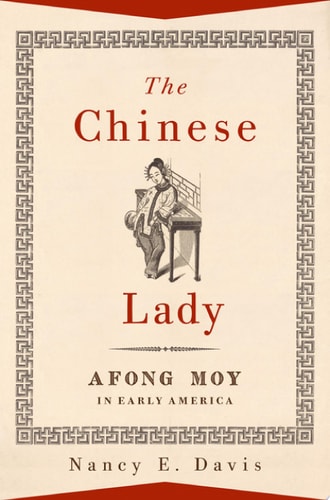
The Chinese Lady
0
0
As an Amazon Associate and affiliate partner, Menrva Books earns from qualifying purchases. Learn more
Author Description
In 1834, A Young Chinese Woman Named Afong Moy Arrived In America, Her Bound Feet Stepping Ashore In New York City. She Was Both A Prized Guest And Advertisement For A Merchant Firm--a Promotional Curiosity Used To Peddle Exotic Wares From The East. Over The Next Few Years, She Would Shape Americans' Impressions Of China Even As She Assisted Her Merchant Sponsors In Selling The Largest Quantities Of Chinese Goods Yet Imported For The Burgeoning American Market. Americans Views Of The Exotic Far East In This Early Period Before Chinese Immigration Were Less Critical Than They Would Later Become. Afong Moy Became A Subject Of Poetry, A Trendsetter For Hair Styles And New Fashions, And A Lucky Name For Winning Racehorses. She Met Americans Face To Face In Cities And Towns Across The Country, Appearing On Local Stages To Sell And To Entertain. Yet She Also Moved In High Society, And Was The First Chinese Guest To Be Welcomed To The White House. However, This Success Was Not To Last. As Her Novelty Wore Off, Afong Moy Was Cast Aside By Her Managers. Though Concerned Public Citizens Rallied In Support, Her Fame Dwindled And She Spent Several Years In A New Jersey Almshouse. In The Late 1840s, P.t. Barnum Offered Afong Moy Several Years Of Promising Renewal As The Compatriot Of Tom Thumb, Yet This Stint Too Was Short-lived. In This First Biography, Nancy E. Davis Sheds Light On The Mystery Of Afong Moy's Life As A Chinese Woman Living In A Foreign Land.
Menrva's Summary
THE THESIS
This biography investigates the life and cultural impact of Afong Moy, the first Chinese woman to arrive in the United States, to understand her role as a commercial curiosity and a symbol of early American perceptions of China. Nancy E. Davis, a curator at the Smithsonian Institution, utilizes extensive archival research, including newspaper accounts, merchant records, and personal correspondence, to reconstruct Moy's trajectory from a promotional attraction to a forgotten figure in an almshouse. The work argues that Moy's presence served as a foundational, albeit exploitative, bridge between American consumer culture and the burgeoning interest in East Asian goods during the 1830s and 1840s.
THE SCOPE MAP
What You Will Find
- Detailed examination of the 1834 arrival of Afong Moy in New York City.
- Analysis of the merchant firm promotional strategies used to market Chinese goods.
- Documentation of Moy's interactions with American high society and her visit to the White House.
- Historical context regarding the shifting American attitudes toward China before the era of mass immigration.
Scope Limits
- The narrative is constrained by the limited personal writings left by Moy herself, necessitating reliance on external accounts.
- The book does not provide a comprehensive history of all Chinese immigrants in the 19th century, focusing specifically on Moy's unique experience.
THE AUTHORITY PERSPECTIVE
Historians and scholars of American cultural history identify this work as a significant recovery of a marginalized voice in early 19th-century records. Readers frequently note the meticulous archival detail provided by Davis, which effectively contextualizes the intersection of commerce, celebrity, and xenophobia in early American history.
Page Count:
296
Publication Date:
2019-01-01
Publisher:
Oxford University Press
ISBN-10:
0190645245
ISBN-13:
9780190645243
History
Biography
Womens History
19th Century
American History
Cultural History
Community Tags
Similar Books