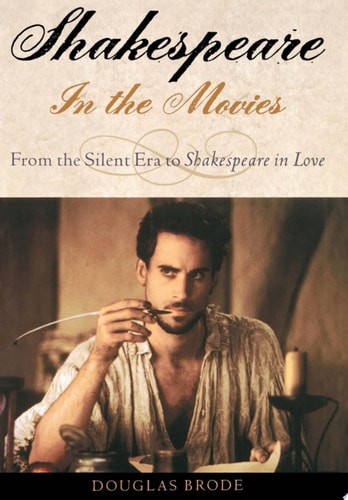
Shakespeare in the Movies: From the Silent Era to Shakespeare in Love
0
0
As an Amazon Associate and affiliate partner, Menrva Books earns from qualifying purchases. Learn more
Author Description
Shakespeare is now enjoying perhaps his most glorious--certainly his most popular--filmic incarnation. Indeed, the Bard has been splashed across the big screen to great effect in recent adaptations of Hamlet, Henry V, Othello, Twelfth Night, Romeo and Juliet, Much Ado About Nothing, Richard II, A Midsummer Night's Dream, and of course in the hugely successful Shakespeare in Love.Unlike previous studies of Shakespeare's cinematic history, Shakespeare in the Movies proceeds chronologically, in the order that plays were written, allowing the reader to trace the development of Shakespeare as an author--and an auteur--and to see how the changing cultural climate of the Elizabethans flowered into film centuries later. Prolific film writer Douglas Brode provides historical background, production details, contemporary critical reactions, and his own incisive analysis, covering everything from the acting of Marlon Brando, Laurence Olivier, Richard Burton, and Gwyneth Paltrow, to the direction of Orson Welles, Kenneth Branagh, and others. Brode also considers the many films which, though not strict adaptations, contain significant Shakespearean content, such as West Side Story and Kurosawa's Ran and Throne of Blood. Nor does Brode ignore the ignoble treatment the master has sometimes received. We learn, for instance, that the 1929 version of The Taming of the Shrew (which featured the eyebrow-raising writing credit: "By William Shakespeare, with additional dialogue by Sam Taylor"), opens not so trippingly on the tongue--PETRUCHIO: "Howdy Kate." KATE: "Katherine to you, mug."For anyone wishing to cast a backward glance over the poet's film career and to better understand his current big-screen popularity, Shakespeare in the Movies is a delightful and definitive guide.
Menrva's Summary
THE THESIS
This book investigates the evolution of William Shakespeare's works as they have been adapted and reinterpreted for the cinema from the silent era through the late 20th century. Douglas C. Brode, a prolific writer on film history, utilizes a chronological framework based on the original composition dates of the plays to analyze how cultural shifts influence cinematic portrayals. By examining production details, critical reception, and directorial choices, the author argues that Shakespeare functions as both a literary source and a cinematic auteur whose influence persists across diverse genres and eras.
THE SCOPE MAP
What You Will Find
- A chronological analysis of Shakespearean adaptations from silent films to modern blockbusters.
- Comparative studies of major directorial approaches, including Orson Welles and Kenneth Branagh.
- Examinations of loose adaptations and films with significant Shakespearean thematic content, such as West Side Story and Kurosawa's works.
- Historical context regarding production challenges and the evolution of screenwriting credits for classic plays.
THE AUTHORITY PERSPECTIVE
Critics and film scholars recognize this work as a comprehensive survey that bridges the gap between literary history and cinematic evolution. Readers frequently note the accessibility of the prose, which balances academic rigor with an engaging overview of the Bard's enduring presence in popular media.
Page Count:
272
Publication Date:
2000-04-27
Publisher:
Oxford University Press
ISBN-10:
0195139585
ISBN-13:
9780195139587
History
Shakespeare
Literary Criticism
Film Studies