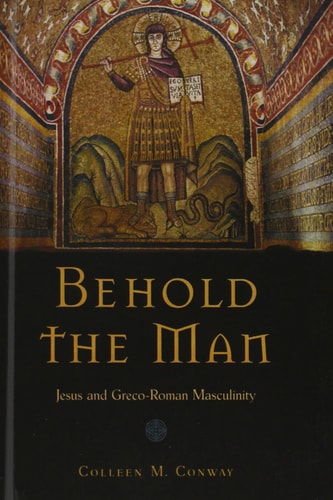
Behold the Man: Jesus and Greco-Roman Masculinity
0
0
As an Amazon Associate and affiliate partner, Menrva Books earns from qualifying purchases. Learn more
Author Description
In this book, Colleen Conway looks at the construction of masculinity in New Testament depictions of Jesus. She argues that the New Testament writers necessarily engaged the predominant gender ideology of the Roman Empire, whether consciously or unconsciously. Although the notion of what constituted ideal masculinity in Greek and Roman cultures certainly pre-dated the Roman Empire, the emergence of the Principate concentrated this gender ideology on the figure of the emperor. Indeed, critical to the success of the empire was the portrayal of the emperor as the ideal man and the Roman citizen as one who aspired to be the same. Any person who was held up alongside the emperor as another source of authority would be assessed in terms of the cultural values represented in this Roman image of the "manly man."Conway examines a variety of ancient ideas of masculinity, as found in philosophical discourses, medical treaties, imperial documents, and ancient inscriptions. Manliness, in these accounts, was achieved through self-control over passions such as lust, anger, and greed. It was also gained through manly displays of courage, the endurance of pain, and death on behalf of others. With these texts as a starting point, Conway shows how the New Testament writings approach Jesus' gender identity. From Paul's early letters to the Gospels and Acts, to the book of Revelation, Christian writings in the Bible confront the potentially emasculating scandal of the cross and affirm Jesus as ideally masculine. Conway's study touches on such themes as the relationship between divinity and masculinity; the role of the body in relation to gender identity; and belief in Jesus as a means of achieving a more ideal form of masculinity. This impeccably researched and highly readable book reveals the importance of ancient gender ideology for the interpretation of Christian texts.
Menrva's Summary
THE THESIS
This work investigates how New Testament authors navigated and incorporated the prevailing Greco-Roman ideals of masculinity when constructing the identity of Jesus. Colleen Conway, a scholar of early Christian literature, utilizes a multidisciplinary approach to analyze how the Roman imperial gender ideology—centered on the figure of the emperor—influenced the theological and narrative framing of Jesus. By examining the intersection of divinity, bodily control, and authority, the author argues that biblical writers actively engaged with contemporary cultural standards to present Jesus as an ideal masculine figure despite the inherent challenges posed by the crucifixion.
THE SCOPE MAP
What You Will Find
- Analysis of Greco-Roman gender ideology including philosophical, medical, and imperial texts.
- Examination of the relationship between the Roman emperor as the archetype of manliness and the portrayal of Jesus.
- Investigation of how New Testament texts address the perceived scandal of the cross through the lens of masculine virtue.
- Exploration of themes such as self-control, endurance of pain, and the role of the body in early Christian identity.
THE AUTHORITY PERSPECTIVE
Scholars and students of early Christianity frequently cite this text for its clear synthesis of complex gender theory and historical context. It is widely regarded as a significant contribution to the study of how ancient cultural norms shaped the development of Christian theology.
Page Count:
272
Publication Date:
2008-05-07
Publisher:
Oxford University Press
ISBN-10:
019532532X
ISBN-13:
9780195325324
Religion
History
Gender Studies
Jesus Christ
Community Tags
Other Editions(2)
Similar Books









Reader Comments
Share Your Thoughts
No comments yet. Be the first to share your thoughts!