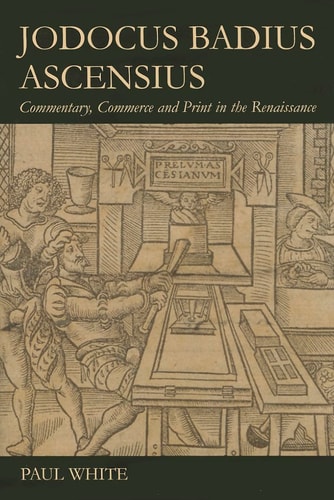
Jodocus Badius Ascensius: Commentary, Commerce and Print in the Renaissance
0
0
As an Amazon Associate and affiliate partner, Menrva Books earns from qualifying purchases. Learn more
Author Description
Jodocus Badius Ascensius (1462-1535) was a scholar and printer who played a central role in the flourishing of humanism and print culture in the French Renaissance. In a career spanning four decades, he was involved with the print publication of something approaching one thousand editions. He was known for the "familiar" commentaries he wrote and published as introductions to the major authors of Latin (and, less frequently, Greek) antiquity, as well as on texts by medieval and contemporary authors. His commentaries and prefaces document the early stages of French humanism, and his texts played a major role in forming the minds of future generations.This book provides an account of Badius's contributions to pedagogy, scholarship, printing and humanist culture. Its main focus is on Latin language commentaries on classical texts. It examines Badius's multiple roles in the light of changing conceptions of textual culture during the Renaissance. It also explores the wider context of the communities with which Badius cultivated relationships: scholars and printers, figures from religious orders, the university and officialdom. It considers the readerships for which Badius produced texts in France, England, Scotland, the Low Countries, and beyond. It explores the ways in which humanists understood the circulation of knowledge in terms of economy and commerce, and their conceptualisations of commentary as a site of cultural mediation.
Menrva's Summary
THE THESIS
How did the intersection of scholarly commentary, commercial printing, and humanist pedagogy define the intellectual landscape of the French Renaissance? Paul A. White examines the career of Jodocus Badius Ascensius, a pivotal figure who bridged the gap between classical scholarship and the burgeoning print industry. By analyzing Badius's extensive output of commentaries and prefaces, White argues that the printer functioned as a vital cultural mediator who shaped the educational standards and reading habits of early modern Europe. The study utilizes archival evidence and bibliographic analysis to situate Badius within the complex networks of scholars, religious institutions, and commercial markets of the sixteenth century.
THE SCOPE MAP
What You Will Find
- An analysis of Badius's role in the production of nearly one thousand editions of classical and contemporary texts.
- An examination of the economic and commercial frameworks governing the circulation of humanist knowledge.
- A study of the pedagogical function of 'familiar' commentaries as tools for student engagement with Latin antiquity.
- An exploration of the international networks connecting Badius to scholars and printers across France, England, Scotland, and the Low Countries.
THE AUTHORITY PERSPECTIVE
Scholars recognize this monograph as a definitive study on the intersection of early modern print culture and humanist pedagogy. Readers frequently note the academic density of the prose, which provides a rigorous examination of the material conditions that enabled the dissemination of classical knowledge during the Renaissance.
Page Count:
350
Publication Date:
2013-12-31
Publisher:
British Academy
ISBN-10:
0197265545
ISBN-13:
9780197265543
History
Biography
Printing History
Renaissance
Literary Criticism
Humanism
Community Tags
Similar Books