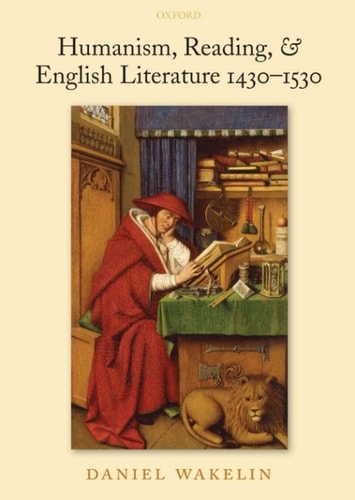
Humanism, Reading, and English Literature 1430-1530
0
0
As an Amazon Associate and affiliate partner, Menrva Books earns from qualifying purchases. Learn more
Author Description
Humanism is usually thought to come to England in the early sixteenth century. In this book, however, Daniel Wakelin uncovers the almost unknown influences of humanism on English literature in the preceding hundred years. He considers the humanist influences on the reception of some of Chaucer's work and on the work of important authors such as Lydgate, Bokenham, Caxton, and Medwall, and in many anonymous or forgotten translations, political treatises, and documents from the fifteenth and early sixteenth centuries. At the heart of his study is a consideration of William Worcester, the fifteenth-century scholar. Wakelin can trace the influence of humanism much earlier than was thought, because he examines evidence in manuscripts and early printed books of the English study and imitation of antiquity, in polemical marginalia on classical works, and in the ways in which people copied and shared classical works and translations. He also examines how various English works were shaped by such reading habits and, in turn, how those English works reshaped the reading habits of the wider community. Humanism thus, contrary to recent strictures against it, appears not as 'top-down' dissemination, but as a practical process of give-and-take between writers and readers. Humanism thus also prompts writers to imagine their potential readerships in ways which challenge them to re-imagine the political community and the intellectual freedom of the reader. Our views both of the fifteenth century and of humanist literature in English are transformed.
Menrva's Summary
THE THESIS
This book investigates the early arrival and practical application of humanist thought in England during the fifteenth century, challenging the traditional view that it only emerged in the sixteenth century. Daniel Wakelin, a scholar of medieval and early modern literature, utilizes a wide array of manuscript evidence and early printed texts to argue that humanism was a dynamic, reciprocal process. By examining how readers and writers engaged with classical texts, he demonstrates that humanism functioned as a collaborative exchange rather than a top-down intellectual movement.
THE SCOPE MAP
What You Will Find
- Analysis of fifteenth-century manuscripts and early printed books
- Examination of marginalia and reading habits regarding classical works
- Case studies on authors including Lydgate, Bokenham, Caxton, and Medwall
- Focus on the scholarly contributions of William Worcester
Scope Limits
- The study does not focus on the later, more institutionalized humanism of the mid-sixteenth century
- It does not provide a comprehensive biography of the authors mentioned, focusing instead on their interaction with humanist texts
THE AUTHORITY PERSPECTIVE
Scholars recognize this work as a significant revisionist study that alters the timeline of humanist influence in England. Readers frequently note the academic density of the prose and the meticulous archival research required to support the author's claims.
Page Count:
256
Publication Date:
2007-01-01
Publisher:
Oxford University Press
ISBN-10:
0191527033
ISBN-13:
9780191527036
History
English & College Success
English
English literature
Humanism
Literary Criticism
Community Tags
Similar Books