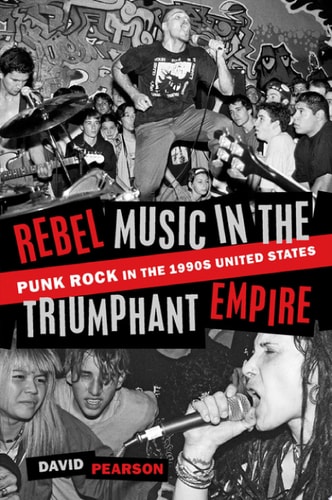
Rebel Music in the Triumphant Empire: Punk Rock in the 1990s United States
0
0
As an Amazon Associate and affiliate partner, Menrva Books earns from qualifying purchases. Learn more
Author Description
At the dawn of the 1990s, as the United States celebrated its victory in the Cold War and sole superpower status by waging war on Iraq and proclaiming democratic capitalism as the best possible society, the 1990s underground punk renaissance transformed the punk scene into a site of radical opposition to American empire. Nazi skinheads were ejected from the punk scene; apathetic attitudes were challenged; women, Latino, and LGBTQ participants asserted their identities and perspectives within punk; the scene debated the virtues of maintaining DIY purity versus venturing into the musical mainstream; and punks participated in protest movements from animal rights to stopping the execution of Mumia Abu-Jamal to shutting down the 1999 WTO meeting. Punk lyrics offered strident critiques of American empire, from its exploitation of the Third World to its warped social relations. Numerous subgenres of punk proliferated to deliver this critique, such as the blazing hardcore punk of bands like Los Crudos, propagandistic crust-punk/dis-core, grindcore and power violence with tempos over 800 beats per minute, and So-Cal punk with its combination of melody and hardcore. Musical analysis of each of these styles and the expressive efficacy of numerous bands reveals that punk is not merely simplistic three-chord rock music, but a genre that is constantly revolutionizing itself in which nuances of guitar riffs, vocal timbres, drum beats, and song structures are deeply meaningful to its audience, as corroborated by the robust discourse in punk zines.
Menrva's Summary
THE THESIS
This book investigates how the 1990s American punk rock scene functioned as a site of radical political opposition to the perceived hegemony of the United States following the Cold War. David Pearson utilizes a combination of musicological analysis and cultural history to examine how underground musicians challenged the prevailing socio-political climate. By analyzing lyrics, subgenre evolution, and the DIY ethos, the author argues that punk served as a sophisticated vehicle for systemic critique rather than mere musical rebellion.
THE SCOPE MAP
What You Will Find
- Analysis of diverse punk subgenres including hardcore, crust-punk, grindcore, and power violence.
- Examination of the intersection between punk music and social movements such as animal rights and anti-globalization protests.
- Evaluation of the tension between maintaining DIY purity and engaging with the musical mainstream.
- Evidence derived from primary source material, specifically the discourse found within contemporary punk zines.
THE AUTHORITY PERSPECTIVE
Experts recognize this work as a detailed examination of the intersection between subcultural music and political activism during the 1990s. Readers frequently note the technical depth of the musical analysis, which moves beyond superficial descriptions to address the specific sonic characteristics of the genre.
Page Count:
274
Publication Date:
2020-01-01
Publisher:
Oxford University Press
ISBN-10:
0197534910
ISBN-13:
9780197534915
Music
History
Punk
Sociology
Humanities
Punk Rock
Criticism history
Community Tags
Similar Books