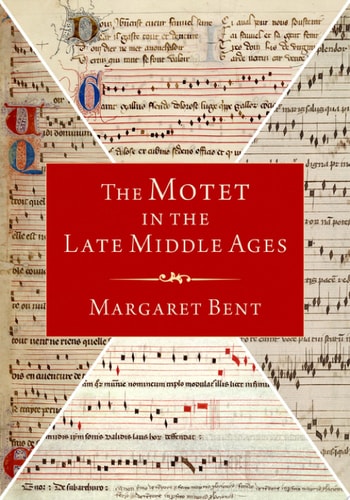
The Motet in the Late Middle Ages
0
0
As an Amazon Associate and affiliate partner, Menrva Books earns from qualifying purchases. Learn more
Author Description
A unique capacity of measured polyphony is to give precisely fixed places not only to musical notes, but also to individual words in relation to them and each other. The Motet in the Late Middle Ages offers innovative approaches to the equal partnership of music and texts in motets of the fourteenth century and beyond, showcasing the imaginative opportunities afforded by this literal kind of intertextuality, and yielding a very different narrative from the common complaint that different simultaneous texts make motets incomprehensible. As leading musicologist Margaret Bent asserts, they simply require a different approach to preparation and listening.In this book, Bent examines the words and music of motets from many different angles: foundational verbal quotations and pre-existent chant excerpts and their contexts, citations both of words and music from other compositions, function, dating, structure, theory, and number symbolism. Individual studies of these original creations tease out a range of strategies, ingenuity, playfulness, striking juxtapositions, and even subversion. Half of the thirty-two chapters consist of new material; the other half are substantially revised and updated versions of previously published articles and chapters, organized into seven Parts. With new analyses of text and music together, new datings, new attributions, and new hypotheses about origins and interrelationships, Bent uncovers little-explored dimensions, provides a window into the craft and thought processes of medieval composers, and opens up many directions for future work.
Menrva's Summary
THE THESIS
This work investigates the complex relationship between text and music in fourteenth-century motets, challenging the notion that simultaneous multiple texts render these compositions incomprehensible. Margaret Bent, a distinguished musicologist, utilizes a combination of historical music theory, structural analysis, and intertextual study to demonstrate how medieval composers employed sophisticated strategies to integrate verbal and musical elements. By re-examining foundational quotations and structural symbolism, the author provides a framework for understanding these works as intentional, highly crafted creations rather than chaotic auditory experiences.
THE SCOPE MAP
What You Will Find
- Detailed analyses of fourteenth-century motet structures and compositional techniques.
- Examination of intertextuality involving pre-existent chant excerpts and verbal citations.
- Studies on number symbolism, dating, and attribution of medieval compositions.
- A collection of thirty-two chapters, half of which are original research and half are revised scholarly articles.
Scope Limits
- The text focuses primarily on the fourteenth century and immediate subsequent developments, excluding earlier or later periods of motet evolution.
- The analysis is specialized and assumes a high level of familiarity with medieval music theory and notation.
THE AUTHORITY PERSPECTIVE
Experts in the field of musicology recognize this volume as a definitive resource for understanding the intellectual and creative processes of medieval composers. Readers frequently note the academic density of the prose, which serves as a foundational text for scholars and advanced students of early music.
Page Count:
776
Publication Date:
2023-01-01
Publisher:
Oxford University Press
ISBN-10:
0190063777
ISBN-13:
9780190063771
Music theory
Music History
Criticism history
Academic
Literature & Fiction
Musicology
Music
Instruments
Community Tags
Other Editions(2)

Similar Books