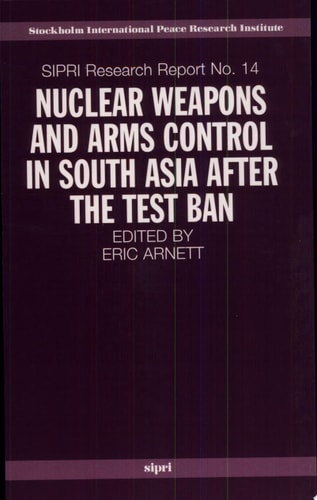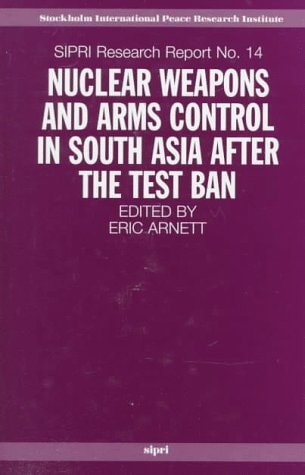
Nuclear Weapons and Arms Control in South Asia after the Test Ban
0
0
As an Amazon Associate and affiliate partner, Menrva Books earns from qualifying purchases. Learn more
Author Description
This book examines an area of the world where arms control is almost non-existent--China, India, and Pakistan--and takes the unusual approach of considering the implications of conventional arms transfers, and in particular India's strategic defenses, for nuclear stability. Building on an analysis of their internal politics and attitudes to nuclear policies, it concludes that certain apparently defensive systems, particularly counter-air systems, have considerable implications for the retention of nuclear capabilities in the region.
Menrva's Summary
THE THESIS
This report investigates the complex intersection of conventional arms transfers and nuclear stability within the geopolitical landscape of China, India, and Pakistan. Eric H. Arnett, a researcher associated with the Stockholm International Peace Research Institute (SIPRI), utilizes regional political analysis and strategic defense data to evaluate how defensive military systems influence nuclear deterrence. The work argues that specific conventional technologies, particularly counter-air systems, inadvertently complicate regional nuclear stability by altering the strategic calculations of these nuclear-armed states.
THE SCOPE MAP
What You Will Find
- Analysis of the arms control environment in China, India, and Pakistan
- Examination of the impact of conventional arms transfers on nuclear deterrence
- Assessment of India's strategic defense capabilities and their regional implications
- Evaluation of internal political factors influencing nuclear policy
THE AUTHORITY PERSPECTIVE
Experts recognize this report as a foundational analysis of the post-Cold War security architecture in South Asia. Readers frequently note the technical focus on military hardware and the clear, objective methodology employed by SIPRI researchers to assess regional stability.
Page Count:
112
Publication Date:
1998-01-01
Publisher:
Oxford University Press
ISBN-10:
0198294123
ISBN-13:
9780198294122
South Asia
Military History
Nuclear weapons
Arms Race
Arms Control
International relations
Community Tags
Other Editions(2)
Similar Books