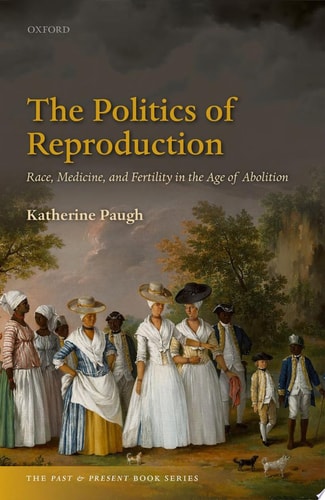
The Politics of Reproduction: Race, Medicine, and Fertility in the Age of Abolition
0
0
As an Amazon Associate and affiliate partner, Menrva Books earns from qualifying purchases. Learn more
Author Description
Many British politicians, planters, and doctors attempted to exploit the fertility of Afro-Caribbean women's bodies in order to ensure the economic success of the British Empire during the age of abolition. Abolitionist reformers hoped that a homegrown labor force would end the need for the Atlantic slave trade. By establishing the ubiquity of visions of fertility and subsequent economic growth during this time, The Politics of Reproduction sheds fresh light on the oft-debated question of whether abolitionism was understood by contemporaries as economically beneficial to the plantation colonies. At the same time, Katherine Paugh makes novel assertions about the importance of Britain's Caribbean colonies in the emergence of population as a political problem. The need to manipulate the labor market on Caribbean plantations led to the creation of new governmental strategies for managing sex and childbearing, such as centralized nurseries, discouragement of extended breastfeeding, and financial incentives for childbearing, that have become commonplace in our modern world. While assessing the politics of reproduction in the British Empire and its Caribbean colonies in relationship to major political events such as the Haitian Revolution, the study also focuses in on the island of Barbados. The remarkable story of an enslaved midwife and her family illustrates how plantation management policies designed to promote fertility affected Afro-Caribbean women during the late eighteenth and early nineteenth centuries. The Politics of Reproduction draws on a wide variety of sources, including debates in the British Parliament and the Barbados House of Assembly, the records of Barbadian plantations, tracts about plantation management published by doctors and plantation owners, and missionary records related to the island of Barbados.
Menrva's Summary
THE THESIS
How did the management of Afro-Caribbean women's fertility become a central political and economic strategy for the British Empire during the era of abolition? Katherine Paugh, a historian specializing in the British Atlantic, examines the intersection of colonial governance, medical practice, and labor economics. She argues that the transition from the Atlantic slave trade to a reliance on enslaved labor reproduction necessitated the development of new governmental interventions into the private lives of women, effectively framing population management as a critical political problem.
THE SCOPE MAP
What You Will Find
- Analysis of plantation management policies including centralized nurseries and breastfeeding regulation.
- Examination of the economic debates surrounding abolitionism and the productivity of Caribbean colonies.
- Evidence drawn from British Parliamentary debates, Barbadian plantation records, and missionary archives.
- A focused case study of an enslaved midwife and her family in Barbados to illustrate the human impact of these policies.
THE AUTHORITY PERSPECTIVE
Historians and scholars of the British Empire recognize this work as a significant contribution to the study of reproductive politics and colonial labor management. The text is noted for its rigorous archival research and its ability to connect macro-level political shifts to the intimate realities of enslaved women.
Page Count:
304
Publication Date:
2017-06-27
Publisher:
Oxford University Press
ISBN-10:
0198789785
ISBN-13:
9780198789789
History
Slavery
Gender Studies
Social Science
Colonialism
Women black
Great Britain
Womens Studies
Medicine
Caribbean Area
Community Tags
Similar Books