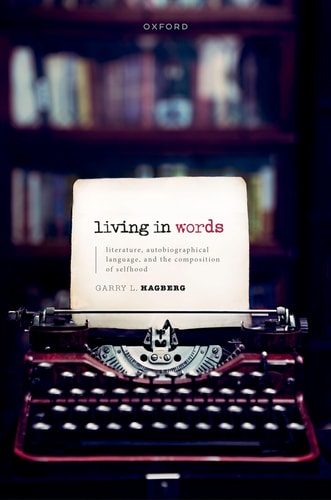
Living in Words: Literature, Autobiographical Language, and the Composition of Selfhood
0
0
As an Amazon Associate and affiliate partner, Menrva Books earns from qualifying purchases. Learn more
Author Description
Living in Words: Literature, Autobiographical Language, and the Composition of Selfhood pursues three main questions: What role does literature play in the constitution of a human being? What is the connection between the language we see at work in imaginative fiction and the language we develop to describe ourselves? And is something more powerful than just description at work -- that is, does self-descriptive or autobiographical language itself play an active role in shaping and solidifying our identities?This adventurous book suggests that interdisciplinary work interweaving philosophy and literature can answer these questions. Main sections investigate the relational model of the self derived from American pragmatism, the sense of rightness that can attach to descriptions of ourselves and our actions, the analogy between interpreting works of art and the interpretation of persons, the special power of literature as a self-compositional tool and the "architecture" of self-narratives and the corresponding growth of self-understanding, what we can learn from cautionary tales concerning the tragic lack of self-knowledge, the possibility of "rewriting" and "rereading" the self, and overall, the assembly of real-life structures of self-definition through our reflective engagement with literature. Throughout, the book develops a model of active, self-constitutive literary reading that provides language for, and sharpens, self-individuation and sensibility.Conjoining a relational conception of selfhood to a narrative conception of self-understanding, Living in Words makes a powerful claim that aesthetic experience and our engagement with the arts is a far more serious matter in human life and society than it in some quarters is taken to be.
Menrva's Summary
THE THESIS
How does the language found in imaginative literature actively shape the construction and composition of human identity? Garry L. Hagberg, a scholar of philosophy and literature, examines the intersection of self-narrative and aesthetic experience. By synthesizing American pragmatism with literary analysis, the author argues that the language we use to describe ourselves is not merely descriptive but a constitutive force that solidifies our sense of selfhood.
THE SCOPE MAP
What You Will Find
- A relational model of the self derived from American pragmatism.
- An analysis of the analogy between interpreting works of art and interpreting individual persons.
- Exploration of the architecture of self-narratives and the potential for rewriting one's own history.
- Case studies and cautionary tales regarding the consequences of lacking self-knowledge.
THE AUTHORITY PERSPECTIVE
Scholars in the fields of philosophy and literary theory view this work as a significant contribution to the study of self-constitution through aesthetic engagement. Readers frequently note the academic density of the prose, which requires a strong background in philosophical inquiry to fully grasp the author's arguments.
Page Count:
304
Publication Date:
2023-01-01
Publisher:
Oxford University Press
ISBN-10:
0198841213
ISBN-13:
9780198841210
Philosophy
Autobiography
Psychology
Literary Criticism
selfhood
Community Tags
Similar Books