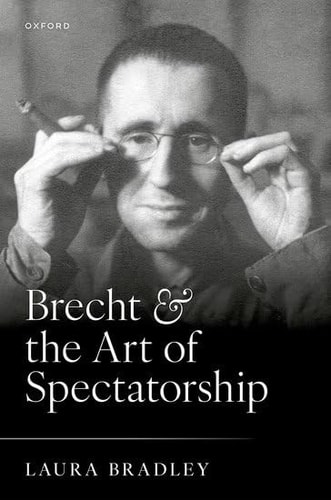
Brecht and the Art of Spectatorship
0
0
As an Amazon Associate and affiliate partner, Menrva Books earns from qualifying purchases. Learn more
Author Description
Brecht And The Art Of Spectatorship Reveals How Bertolt Brecht's Epic Theatre Sought To Transform The Viewing Practices Of Spectators, Equipping Them To Critique And Intervene In The World Outside The Theatre. It Explores Vision, Observation, And Spectatorship In Twelve Of Brecht's Plays, Relating This Analysis To His Own Formative Experiences Of Spectatorship, To His Poems And Theories, And To Productions Directed By Brecht And His Close Collaborators. Finally, It Investigates Brecht's Attempts To Transform The Composition Of The Audience And Cultivate Critical Spectatorship At The Berliner Ensemble, The Theatre He Founded With His Wife, The Actor Helene Weigel, In East Berlin After The Second World War. Brecht's Plays Foreground Scenarios In Which Watching Matters, As Characters Witness Acts Of Injustice, Watch Trials Or Punishments, Engage In Surveillance, Or Observe Scientific Experiments. These Instances Of Onstage Spectatorship Show The Theatre Audience What Characters Notice, What They Overlook, And How They Use Or Ignore The Knowledge That They Have Gained Through Spectatorship. Drawing On Unpublished Archival Sources And Material That Has Previously Been Rarely Consulted, Laura Bradley Shows How Brecht And His Close Collaborators Dealt With Onstage Spectatorship In Performance, Presenting Characters As Observers And Spectators From Whom The Theatre Audience Should Learn. By Combining Analysis Of Text, Performance, And Reception, Brecht And The Art Of Spectatorship Provides Rich Insights Into Brecht's Plays, Rehearsal Methods, And Stagings, And The Experiences Of Spectators At Productions Of His Plays In The Weimar Republic, In Exile, And In The Gdr-- Provided By Publisher.
Menrva's Summary
THE THESIS
This book investigates how Bertolt Brecht utilized the mechanics of spectatorship within his plays to transform audience members into active, critical participants in society. Laura Bradley, a scholar of German theater, synthesizes archival research, production history, and textual analysis to argue that Brecht’s concept of Epic Theatre was fundamentally designed to train the viewer's gaze. By examining how characters within the plays observe injustice and scientific inquiry, the author demonstrates how Brecht intended to bridge the gap between theatrical representation and real-world political intervention.
THE SCOPE MAP
What You Will Find
- Analysis of twelve distinct plays by Bertolt Brecht, including their rehearsal methods and staging techniques.
- Examination of the Berliner Ensemble’s efforts to cultivate critical spectatorship in post-war East Berlin.
- Integration of previously unpublished archival materials and rare production records from the Weimar Republic and exile periods.
- A theoretical framework connecting Brecht’s personal experiences as a spectator to his dramatic theories and poetic works.
THE AUTHORITY PERSPECTIVE
Experts recognize this work as a significant contribution to Brechtian scholarship due to its extensive use of previously untapped archival sources. Readers frequently note the academic density of the prose, which serves as a foundational text for students and researchers of twentieth-century European theater.
Page Count:
304
Publication Date:
2025-10-31
Publisher:
Oxford University Press
ISBN-10:
0198934947
ISBN-13:
9780198934943
History
Drama
Performance Studies
Theater Studies
Literary Criticism
Community Tags
Similar Books