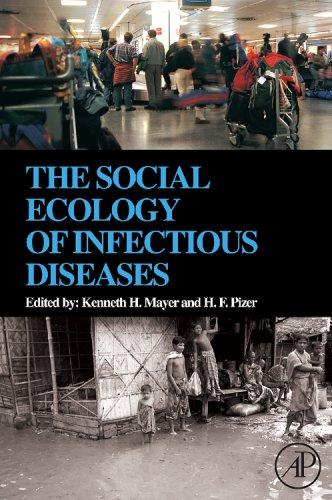
The Social Ecology of Infectious Diseases
0
0
As an Amazon Associate and affiliate partner, Menrva Books earns from qualifying purchases. Learn more
Author Description
Social Ecology of Infectious Diseases explores how human activities enable microbes to disseminate and evolve, thereby creating favorable conditions for the diverse manifestations of communicable diseases. Today, infectious and parasitic diseases cause about one-third of deaths and are the second leading cause of morbidity and mortality. The speed that changes in human behavior can produce epidemics is well illustrated by AIDS, but this is only one of numerous microbial threats whose severity and spread are determined by human behaviors. In this book, forty experts in the fields of infectious diseases, the life sciences and public health explore how demography, geography, migration, travel, environmental change, natural disaster, sexual behavior, drug use, food production and distribution, medical technology, training and preparedness, as well as governance, human conflict and social dislocation influence current and likely future epidemics. * Provides essential understanding of current and future epidemics * Presents a crossover perspective for disciplines in the medical and social sciences and public policy, including public health, infectious diseases, population science, epidemiology, microbiology, food safety, defense preparedness and humanitarian relief * Creates a new perspective on ecology based on the interaction of microbes and human activities.
Menrva's Summary
THE THESIS
This book investigates how human activities create environments that foster the spread and evolution of infectious diseases. Forty experts examine the complex interplay between human behaviors and microbial dissemination, exploring how factors such as demography, migration, environmental change, sexual behavior, drug use, food production, medical technology, and governance shape current and future epidemics.
THE SCOPE MAP
- Exploration of how human activities enable microbial dissemination and evolution.
- Analysis of the impact of demography, geography, migration, and travel on epidemics.
- Examination of environmental change, natural disasters, and their role in disease spread.
- Discussion of sexual behavior, drug use, and food production/distribution influences.
- Consideration of medical technology, training, preparedness, governance, and conflict.
- A crossover perspective for medical, social sciences, and public policy disciplines.
- A new ecological perspective based on microbe-human activity interactions.
THE AUTHORITY PERSPECTIVE
The book is presented as an essential resource for understanding current and future epidemics, offering a unique perspective that bridges medical and social sciences. Its strength lies in the compilation of insights from forty experts across various fields, creating a comprehensive view of the factors influencing disease spread. The work aims to establish a novel ecological framework centered on the interaction between microbes and human activities, providing a valuable resource for public health professionals, researchers, and policymakers.
Page Count:
440
Publication Date:
2007-01-01
ISBN-10:
0123704669
ISBN-13:
9780123704665
Non-Fiction
Science
Epidemiology
Ecology
Public Health
Microbiology
Community Tags
Similar Books