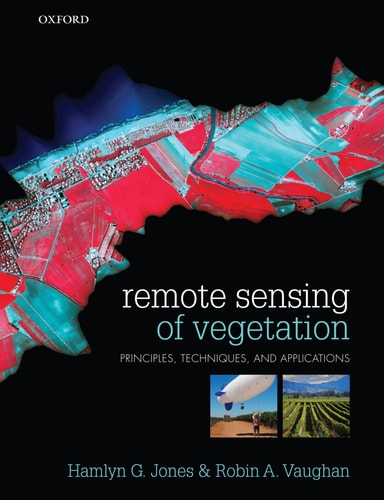
Remote Sensing of Vegetation: Principles, Techniques, and Applications
0
0
As an Amazon Associate and affiliate partner, Menrva Books earns from qualifying purchases. Learn more
Author Description
Remote sensing is becoming an increasingly important tool for agriculturalists, ecologists, and land managers for the study of Earth's agricultural and natural vegetation, and can be applied to further our understanding of key environmental issues, including climate change and ecosystem management.This timely introduction offers an accessible yet rigorous treatment of the basics of remote sensing at all scales, illustrating its practical application to the study of vegetation. Despite a quantitative approach, the advanced mathematics and complex models common in modern remote sensing literature is demystified through clear explanations that emphasise the key underlying principles, and the core physical aspects are explained in the biological context of vegetation and its adaptation to its specific environment.Various techniques and instruments are addressed, making this a valuable source of reference, and the advantages and disadvantages of these are further illustrated through worked examples and case studies.DT Rigorous physical and mathematical principles presented in a way readily understood by those without a strong mathematical backgroundDT Boxes throughout summarize key information and conceptsDT The student is directed to carefully chosen further reading articles, allowing them to explore key topics in more detailOnline Resource CentreThe Online Resource Centre to accompany Remote Sensing of Vegetation features:For Students:DT Links to useful websitesFor lecturers:DT Figures from the book in electronic format, ready to download
Menrva's Summary
THE THESIS
This text investigates the fundamental principles and practical applications of remote sensing technology as a primary tool for monitoring agricultural and natural vegetation systems. Authors Hamlyn G. Jones and Robin A. Vaughan provide a comprehensive framework that bridges the gap between complex physical modeling and biological observation. By focusing on the interaction between electromagnetic radiation and plant physiology, the authors establish a methodology for utilizing satellite and aerial data to address critical environmental challenges such as climate change and ecosystem management.
THE SCOPE MAP
What You Will Find
- Principles of electromagnetic radiation interaction with plant canopies and soil surfaces.
- Comparative analysis of various remote sensing instruments and sensor platforms.
- Case studies illustrating the practical application of data in agricultural and ecological management.
- Methodological guidance on interpreting spectral signatures for vegetation health and biomass estimation.
THE AUTHORITY PERSPECTIVE
Experts recognize this text as a highly accessible entry point for students and professionals who require a firm grasp of remote sensing without the burden of overly dense mathematical proofs. Readers frequently highlight the utility of the integrated case studies and the clear biological context provided for complex physical phenomena.
Page Count:
353
Publication Date:
2010-09-10
Publisher:
Oxford University Press
ISBN-10:
0199207798
ISBN-13:
9780199207794
Science
Remote sensing
Plants
Agriculture
Botany
Ecology
Community Tags
Similar Books