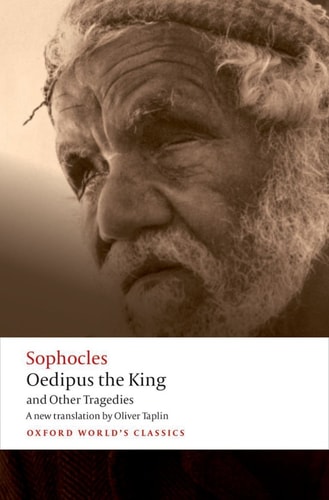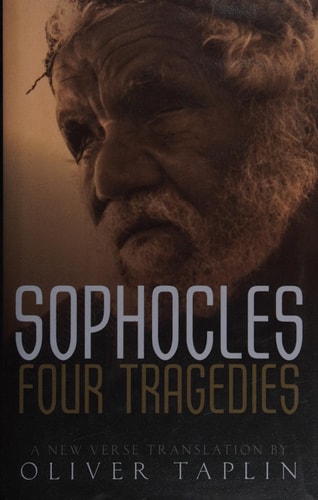
Sophocles: Four Tragedies: Oedipus the King, Aias, Philoctetes, Oedipus at Colonus
0
0
As an Amazon Associate and affiliate partner, Menrva Books earns from qualifying purchases. Learn more
Author Description
Sophocles stands as one of the greatest dramatists of all time, influencing a vast array of artists and thinkers over the centuries. Disturbing and unrelenting, his tragedies portray what Matthew Arnold referred to as 'the turbid ebb and flow of human misery', allowing the audience to stand on the verge of the abyss and confront the waste and disorder of human existence. The heroic myths reinterpreted in the plays locate them within a world in which the extremes of human emotion in its darkest hours can be freely explored. It is, however, the creativity of Sophocles' plays which prevents them from descending into unbridled chaos or despair. The unflinching engagement with heartrending suffering reveals strengths held within the carefully crafted poetry, lyricism, and movement. There is, as Taplin writes, 'no blinking, no evasion, no palliative.... Out of apparently meaningless suffering comes meaning and form.'This original and distinctive verse translation of four of Sophocles' plays conveys the vitality of his poetry and the vigour of the plays as performed showpieces, encouraging the reader to relish the sound of the spoken verse and the potential for song within the lyrics. Each play is accompanied by an introduction and substantial notes on points of fact and interpretation, drawing on the translator's many years of lecturing on Sophocles at the University of Oxford.Oedipus the King, often regarded as the archetypal tragedy, follows Oedipus, the 'man of sorrow', who has unwittingly chosen to enact his prophesied course by murdering his father and marrying his mother.Aias (or Ajax) tells the story of the warrior whose larger-than-life greatness brings him to harrowing humiliation and then to honourable burial.Philoctetes sees a once-noble hero, nursing his resentment during ten years in marooned isolation, eventually restored to glory at Troy.Oedipus at Colonus depicts the blind Oedipus towards the end of his life wandering as a beggar, but rewarded finally with revenge and a sublime death.
Menrva's Summary
THE PULSE
The central conflict involves the collision between human agency and the inexorable weight of divine prophecy. These four plays follow protagonists who confront the limits of their own autonomy when faced with catastrophic reversals of fortune. The narrative framework utilizes the conventions of Attic tragedy, characterized by the interplay between spoken dialogue and choral song. The characters operate within a world governed by rigid social codes and the unpredictable interventions of the gods, forcing them to navigate the consequences of their past actions and moral choices.
INSIDE THE PAGES
- Utilization of the traditional Greek chorus to provide commentary and thematic context.
- Exploration of the tension between individual heroism and communal expectations.
- Integration of verse translation designed to emphasize the rhythmic vitality of the original Greek.
- Focus on the psychological interiority of characters facing extreme isolation or public disgrace.
- Structural reliance on the dramatic irony inherent in the protagonists' lack of self-knowledge.
- Inclusion of scholarly introductions and notes detailing historical and linguistic context.
- Examination of the concept of 'arête' or excellence in the face of inevitable suffering.
- Emphasis on the performative nature of the plays as showpieces for the ancient stage.
THE COLLECTIVE ECHO
Readers and critics frequently highlight the effectiveness of Oliver Taplin's translation in capturing the sonic qualities and performative energy of the original Greek verse. Discussion often centers on the balance between the stark, often brutal nature of the tragic events and the formal precision of Sophocles' poetic structure. Scholars appreciate the inclusion of extensive notes that provide necessary historical grounding for contemporary readers. The collection is widely regarded as a useful resource for those interested in the intersection of classical literature and theatrical performance. The work successfully avoids overly academic dryness by maintaining a focus on the visceral impact of the plays as living texts.
Page Count:
384
Publication Date:
2015-05-19
Publisher:
Oxford University Press
ISBN-10:
019928623X
ISBN-13:
9780199286232
Poetry
Drama
Sophocles
Greek Mythology
Plays
Classical
English drama
Community Tags
Similar Books