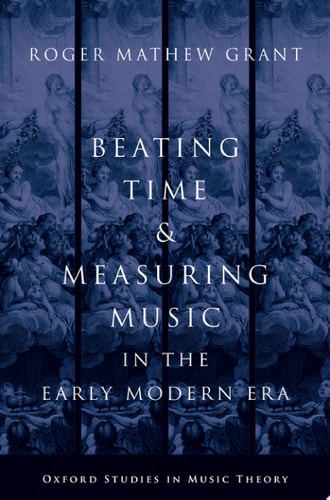
Beating Time & Measuring Music in the Early Modern Era
0
0
As an Amazon Associate and affiliate partner, Menrva Books earns from qualifying purchases. Learn more
Author Description
Beating Time & Measuring Music in the Early Modern Era chronicles the shifting relationships between ideas about time in music and science from the sixteenth through the early nineteenth centuries. Centered on theories of musical meter, the book investigates the interdependence between theories of meter and conceptualizations of time from the age of Zarlino to the invention of the metronome. These formulations have evolved throughout the history of Western music, reflecting fundamental reevaluations not only of music but also of time itself. Drawing on paradigms from the history of science and technology and the history of philosophy, author Roger Mathew Grant illustrates ways in which theories of meter and time, informed by one another, have manifested themselves in the field of music.During the long eighteenth century, treatises on subjects such as aesthetics, music theory, mathematics, and natural philosophy began to reflect an understanding of time as an absolute quantity, independent of events. This gradual but conclusive change had a profound impact on the network of ideas connecting time, meter, character, and tempo. Investigating the impacts of this change, Grant explores the timekeeping techniques - musical and otherwise - that implemented this conceptual shift, both technologically and materially. Bringing together diverse strands of thought in a broader intellectual history of temporality, Grant's study fills an unexpected yet conspicuous gap in the history of music theory, and is essential reading for music theorists and composers as well as historical musicologists and practitioners of historically informed performance.
Menrva's Summary
THE THESIS
This book investigates the historical evolution of musical meter and its conceptual interdependence with shifting scientific and philosophical understandings of time from the sixteenth to the early nineteenth centuries. Roger Mathew Grant, a scholar of music theory and history, synthesizes treatises from aesthetics, mathematics, and natural philosophy to demonstrate how the perception of time transitioned from an event-based phenomenon to an absolute, independent quantity. By examining the period between Zarlino and the invention of the metronome, the author provides a framework for understanding how these intellectual shifts fundamentally altered the composition and performance of Western music.
THE SCOPE MAP
What You Will Find
- Analysis of musical meter theories from the sixteenth century through the early nineteenth century.
- Examination of the intellectual history of temporality across aesthetics, mathematics, and natural philosophy.
- Investigation of the technological and material techniques used for timekeeping in musical practice.
- Exploration of the transition from relative time to absolute time as a primary conceptual shift in Western music.
THE AUTHORITY PERSPECTIVE
Scholars and music theorists recognize this work as a significant contribution to the intellectual history of music, particularly for its interdisciplinary approach to temporality. Readers frequently note the academic density of the prose, which serves as a foundational text for those studying historically informed performance and the evolution of music theory.
Page Count:
328
Publication Date:
2014-01-01
Publisher:
Oxford University Press
ISBN-10:
0199367299
ISBN-13:
9780199367290
Philosophy
Non-Fiction
Humanities
Music History
Music theory
Music Technology
Community Tags
Similar Books