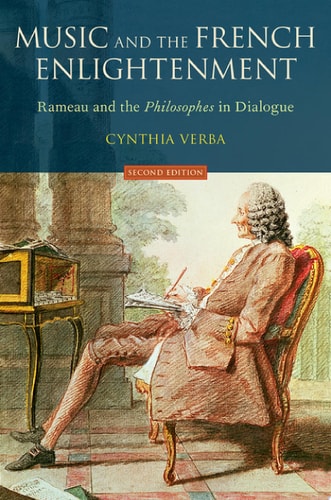
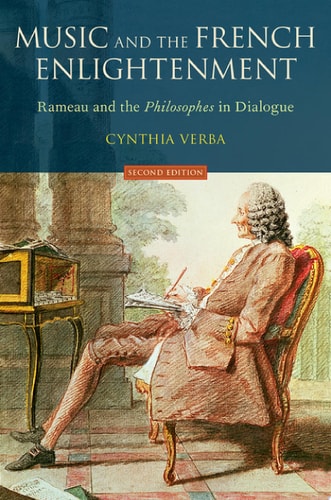
Music and the French Enlightenment: Rameau and the Philosophes in Dialogue
0
0
As an Amazon Associate and affiliate partner, Menrva Books earns from qualifying purchases. Learn more
Author Description
Around the middle of the eighteenth century, the leading figures of the French Enlightenment engaged in a philosophical debate about the nature of music. The principal participants-Rousseau, Diderot, and d'Alembert-were responding to the views of the composer-theorist Jean-Philippe Rameau, who was both a participant and increasingly a subject of controversy.The discussion centered upon three different events occurring roughly simultaneously. The first was Rameau's formulation of the principle of the fundamental bass, which explained the structure of chords and their progression. The second was the writing of the Encyclopédie, edited by Diderot and d'Alembert, with articles on music by Rousseau. The third was the "Querelle des Bouffons," over the relative merits of Italian comic opera and French tragic opera. The philosophes, in the typical manner of Enlightenment thinkers, were able to move freely from the broad issues of philosophy and criticism, to the more technical questions of music theory, considering music as both art and science. Their dialogue was one of extraordinary depth and richness and dealt with some of the most fundamental issues of the French Enlightenment.In the newly revised edition of Music and the French Enlightenment, Cynthia Verba updates this fascinating story with the prolific scholarship that has emerged since the book was first published. Stressing the importance of seeing the philosophes' writings in context of a dynamic dialogue, Verba carefully reconstructs the chain of arguments and rebuttals across which Rousseau, D'Alembert, and Diderot formulated their own evolving positions. A section of key passages in translation presents several texts in English for the first time, recapturing the tenor and tone of the dialogue at hand. In a new epilogue, Verba discusses important trends in new scholarship, tracing how scholars continue to grapple with many of the same fundamental oppositions and competing ideas that were debated by the philosop
Menrva's Summary
THE THESIS
This book investigates the intellectual conflict between composer Jean-Philippe Rameau and the leading French philosophes regarding the nature, structure, and aesthetic value of music during the mid-eighteenth century. Cynthia Verba, a scholar of musicology, utilizes primary source texts and historical context to reconstruct the evolving arguments between Rameau, Rousseau, Diderot, and d'Alembert. By examining the intersection of music theory and Enlightenment philosophy, the author demonstrates how these thinkers treated music as both a rigorous science and a profound art form.
THE SCOPE MAP
What You Will Find
- Analysis of Rameau's fundamental bass theory and its reception.
- Examination of the Encyclopédie's musical contributions.
- Historical context of the Querelle des Bouffons opera debate.
- Translated primary source passages from key Enlightenment figures.
- Synthesis of contemporary scholarship on eighteenth-century musical aesthetics.
Scope Limits
- The text focuses primarily on the French intellectual tradition rather than broader European musical developments.
- It does not provide a comprehensive biography of Rameau, but rather focuses on his role within this specific philosophical dialogue.
THE AUTHORITY PERSPECTIVE
Scholars and musicologists recognize this work as a foundational text for understanding the intersection of Enlightenment thought and musical theory. Readers frequently note the academic density of the prose, which provides a rigorous examination of the primary source materials and historical debates.
Page Count:
212
Publication Date:
2016-01-01
Publisher:
Oxford University Press
ISBN-10:
0190633263
ISBN-13:
9780190633264
Philosophy
Music History
Music theory
Humanities
Intellectual History
Cultural History
Music Technology
Community Tags
Other Editions(2)
Similar Books



Reader Comments
Share Your Thoughts
No comments yet. Be the first to share your thoughts!