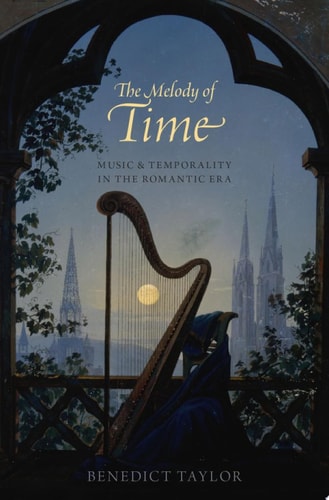
The Melody of Time: Music and Temporality in the Romantic Era
0
0
As an Amazon Associate and affiliate partner, Menrva Books earns from qualifying purchases. Learn more
Author Description
From the Romantic era onwards, music has been seen as the most quintessentially temporal art, possessing a unique capacity to invoke the human experience of time. Through its play of themes and recurrence of events, music has the ability to stylise in multiple ways our temporal relation to the world, with far-reaching implications for modern conceptions of memory, subjectivity, personal and collective identity, and history. Time, as philosophers, scientists and writers have found throughout history, is notoriously hard to define. Yet music, seemingly bound up so intimately with the nature of time, might well be understood as disclosing aspects of human temporality unavailable to other modes of inquiry, and accordingly was frequently granted a privileged position in nineteenth-century thought. The Melody of Time examines the multiple ways in which music relates to, and may provide insight into, the problematics of human time. Each chapter explores a specific theme in the philosophy of time as expressed through music: the purported timelessness of Beethoven's late works or the nostalgic impulses of Schubert's music; the use of music by philosophers as a means to explicate the aporias of temporal existence or as a medium suggestive of the varying possible structures of time; and, a reflection of a particular culture's sense of historical progress or the expression of the intangible spirit behind the course of human history itself. Moving fluidly between cultural context and historical reception, competing philosophical theories of time and close reading of the repertoire, Benedict Taylor argues for the continued importance of engaging with music's temporality in understanding the significance of music within society and human experience. At once historical, analytical, critical, and ultimately hermeneutic, The Melody of Time provides both fresh insight into many familiar nineteenth-century pieces and a rich theoretical basis for future research.
Menrva's Summary
THE THESIS
How does music in the nineteenth century function as a unique medium for articulating and understanding the complexities of human temporality? Benedict Taylor, a scholar specializing in nineteenth-century music, synthesizes philosophical inquiry with musicological analysis to argue that music serves as a privileged site for exploring memory, subjectivity, and historical consciousness. By examining the intersection of aesthetic theory and musical structure, the author demonstrates that the Romantic era's preoccupation with time remains central to our modern understanding of human experience.
THE SCOPE MAP
What You Will Find
- Philosophical analysis of temporal concepts including nostalgia, progress, and timelessness.
- Close readings of nineteenth-century repertoire, specifically focusing on Beethoven and Schubert.
- Interdisciplinary framework connecting musicology, philosophy, and cultural history.
Scope Limits
- The analysis is primarily restricted to the nineteenth-century European musical tradition.
- The text does not provide a comprehensive history of music theory outside of its relation to temporal philosophy.
THE AUTHORITY PERSPECTIVE
Scholars and musicologists frequently cite this work for its rigorous integration of philosophical theory with detailed musical analysis. It is widely regarded as a significant contribution to the study of Romantic-era aesthetics and the intersection of music and temporal perception.
Page Count:
324
Publication Date:
2015-01-01
Publisher:
Oxford University Press
ISBN-10:
0190493291
ISBN-13:
9780190493295
Philosophy
Academic
Romanticism
Music
Musicology
Humanities
Music History
Community Tags
Similar Books