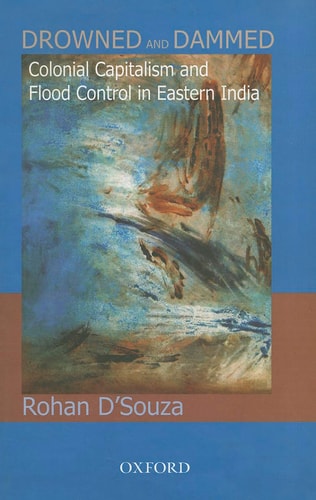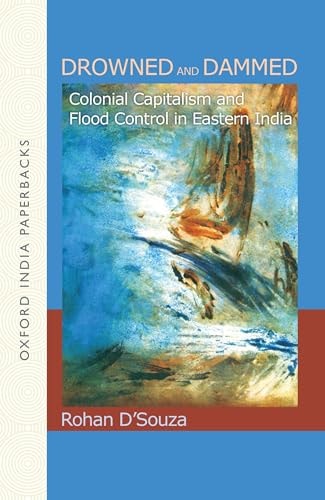
Drowned and Dammed: Colonial Capitalism and Flood Control in Eastern India
0
0
As an Amazon Associate and affiliate partner, Menrva Books earns from qualifying purchases. Learn more
Author Description
This book explores the idea and practice of flood control and argues that this is a part of a political agenda, deeply implicated in the social, economic, and political calculations of capitalism in general and colonialism in particular. It argues for a comprehensive reconsideration of the debate on the colonial environmental watershed, its hydraulic legacy, and questions contemporary enthusiasm for flood control in post-independent India.The author argues that the British assembled and deployed the idea and practice of flood control in order to secure their presence in the Orissa Delta. It was principally a political project deeply implicated in the social, economic, and political calculations of capitalism in general and colonialism in particular. Through the function of flood control, colonial rule sought to organize systems of land revenue, institute capitalist private property, and shape the region's hydrology with physical infrastructure such as embankments, canal networks, and inevitably the Hirakud Dam. In seeking to dominate the delta's many rivers, colonial capitalism brought about an unprecedented ecological rupture by transforming the Orissa Delta from a flood-dependent agrarian regime to a flood-vulnerable landscape. This ecological rupture revealed the particularities of colonial capitalism in its relationships with the natural world.
Menrva's Summary
THE THESIS
This book investigates how colonial flood control policies in the Orissa Delta functioned as a political instrument of capitalist expansion rather than a purely technical solution to environmental challenges. Rohan D'Souza, an environmental historian, utilizes archival research and hydrological analysis to demonstrate that British infrastructure projects were designed to secure land revenue and establish private property rights. The author argues that these interventions fundamentally altered the region's ecology, shifting it from a flood-dependent agrarian system to one characterized by permanent vulnerability.
THE SCOPE MAP
What You Will Find
- Historical analysis of colonial land revenue systems and their relationship to hydraulic infrastructure.
- Examination of the construction and socio-political impact of embankments, canal networks, and the Hirakud Dam.
- Case study of the Orissa Delta as a site of ecological and political transformation under British rule.
- Critique of contemporary flood control paradigms in post-independent India.
THE AUTHORITY PERSPECTIVE
Scholars in environmental history and South Asian studies recognize this work as a critical examination of the intersection between colonial governance and ecological management. Readers frequently note the academic rigor and the author's ability to connect specific hydraulic engineering projects to broader capitalist agendas.
Page Count:
290
Publication Date:
2016-11-29
Publisher:
Oxford University Press
ISBN-10:
019946913X
ISBN-13:
9780199469130
History
India
Colonialism
Environmental History
Flood Control
Hydrology
Community Tags
Similar Books