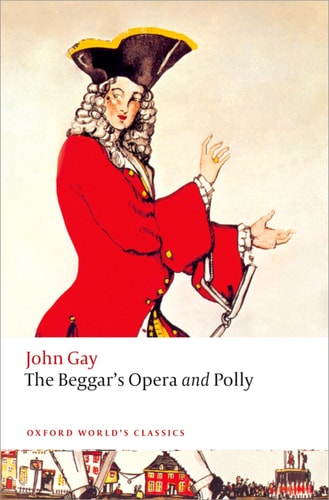
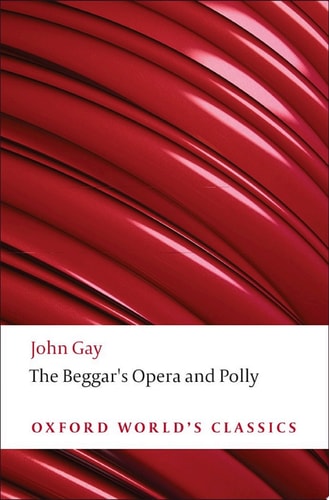
The Beggar's Opera and Polly
0
0
As an Amazon Associate and affiliate partner, Menrva Books earns from qualifying purchases. Learn more
Author Description
"Gamesters and Highwaymen are generally very good to their Whores, but they are very Devils to their Wives."Raucous, lyrical, witty, ironic and tragic by turns, The Beggar's Opera and Polly--published together here for the first time--offer a scathing and ebullient portrait of a society in which statesmen and outlaws, colonialists and pirates, are impossible to tell apart.With The Beggar's Opera, John Gay created one of the most enduringly popular works in English theatre history, and invented a new dramatic form, the ballad opera. Gay's daring mixture of caustic political satire, well-loved popular tunes, and a story of crime and betrayal set in the urban underworld of prostitutes and thieves was an overnight sensation. And its sequel, Polly, banned in Gay's lifetime, boasted a cross-dressing heroine and a cast of female adventurers, pirates, Indian princes, rebel slaves, and rapacious landowners--a culture in which all human relationships are reduced to commercial transactions.The Introduction to this edition explores Gay's use of criminal and rogue literature, the political context of the plays, Gay's attitude to slavery and piracy, his treatment of gender, and the plays' formal theatrical innovations. The text is the most accurate available, with notes that explain criminal and underworld slang and the topical allusions that gave Gay's satire its edge. The volume also includes an appendix on the sources for the tunes Gay used for the two plays, highlighting many cases where the songs' original words, familiar to contemporary audiences, give a bawdy or ironic double meaning to Gay's lyrics.About the Series: For over 100 years Oxford World's Classics has made available the broadest spectrum of literature from around the globe. Each affordable volume reflects Oxford's commitment to scholarship, providing the most accurate text plus a wealth of other valuable features, including expert introductions by leading authorities, voluminous notes to clarify the text, up-to-date bibliographies for further study, and much more.
Menrva's Summary
THE PULSE
A cynical underworld of thieves and highwaymen collides with the corrupt structures of high society in these two seminal ballad operas. John Gay presents a narrative framework where the line between the criminal and the political elite is intentionally blurred. In The Beggar's Opera, the protagonist Macheath navigates a web of betrayal and romance within the London underworld, while Polly follows a cross-dressing heroine into a colonial landscape of pirates and rebels. These plays utilize a mixture of popular song and biting dialogue to expose the commercialization of human relationships. The narrative relies on irony and social critique to challenge the moral authority of the ruling class.
INSIDE THE PAGES
- Integration of popular ballad tunes with original satirical lyrics
- Use of criminal and underworld slang to establish atmosphere
- Exploration of gender roles through cross-dressing and female agency
- Scathing political commentary on corruption and colonial exploitation
- Structural innovation of the ballad opera form
- Inclusion of diverse character archetypes from pirates to landowners
- Focus on the transactional nature of marriage and social status
- Use of irony to highlight the hypocrisy of statesmen and outlaws
THE COLLECTIVE ECHO
Readers and critics frequently highlight the enduring relevance of Gay's wit and his ability to dismantle social hierarchies through humor. Discussion often centers on the plays' formal innovation, specifically the seamless blending of low-brow criminal themes with high-brow political satire. Scholars emphasize the importance of the musical elements, noting how the original popular tunes provide a layer of ironic subtext for contemporary audiences. The balance between the gritty, urban setting of the first play and the expansive, colonial scope of the sequel is often cited as a key strength of the collection. Overall, the works are regarded as essential studies in the evolution of English theatrical satire and the critique of institutional power.
Page Count:
256
Publication Date:
2013-05-01
Publisher:
Oxford University Press
ISBN-10:
0199642222
ISBN-13:
9780199642229
Drama
Satire
Ballad Opera
Dramatic works
Plays
classic
Community Tags
Other Editions(4)
Similar Books


Reader Comments
Share Your Thoughts
No comments yet. Be the first to share your thoughts!