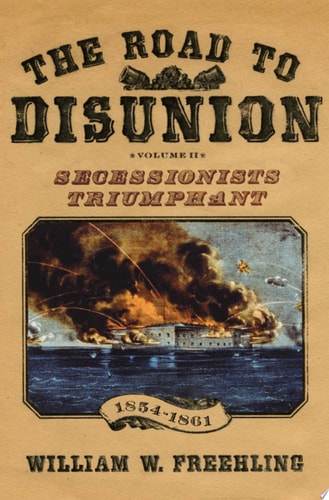
Road to Disunion: Volume II: Secessionists Triumphant, 1854-1861
0
0
As an Amazon Associate and affiliate partner, Menrva Books earns from qualifying purchases. Learn more
Author Description
Here Is History In The Grand Manner, A Powerful Narrative Peopled With Dozens Of Memorable Portraits, Telling This Important Story With Skill And Relish. Freehling Highlights All The Key Moments On The Road To War, Including The Violence In Bleeding Kansas, Preston Brooks's Beating Of Charles Sumner In The Senate Chambers, The Dred Scott Decision, John Brown's Raid On Harper's Ferry, And Much More. As Freehling Shows, The Election Of Abraham Lincoln Sparked A Political Crisis, But At First Most Southerners Took A Cautious Approach, Willing To Wait And See What Lincoln Would Do--especially, Whether He Would Take Any Antagonistic Measures Against The South. But At This Moment, The Extreme Fringe In The South Took Charge, First In South Carolina And Mississippi, But Then Throughout The Lower South, Sounding The Drum Roll For Secession. Indeed, The Road To Disunion Is The First Book To Fully Document How This Decided Minority Of Southern Hotspurs Took Hold Of The Secessionist Issue And, Aided By A Series Of Fortuitous Events, Drove The South Out Of The Union. Freehling Provides Compelling Profiles Of The Leaders Of This Movement--many Of Them Members Of The South Carolina Elite. Throughout The Narrative, He Evokes A World Of Fascinating Characters And Places As He Captures The Drama Of One Of America's Most Important--and Least Understood--stories. The Long-awaited Sequel To The Award-winning Secessionists At Bay, Which Was Hailed As The Most Important History Of The Old South Ever Published, This Volume Concludes A Major Contribution To Our Understanding Of The Civil War. A Compelling, Vivid Portrait Of The Final Years Of The Antebellum South, The Road To Disunion Will Stand As An Important History Of Its Subject. This Sure-to-be-lasting Work--studded With Pen Portraits And Consistently Astute In Its Appraisal Of The Subtle Cultural And Geographic Variations In The Region--adds Crucial Layers To Scholarship On The Origins Of America's Bloodiest Conflict. --the Atlantic
Menrva's Summary
THE THESIS
This volume investigates how a determined minority of Southern secessionists successfully maneuvered the American South toward disunion and civil war between 1854 and 1861. William W. Freehling, a preeminent historian of the antebellum South, utilizes extensive primary source documentation and biographical analysis to challenge the notion that secession was an inevitable mass movement. He argues that a specific cadre of elite Southern radicals exploited political crises and fortuitous events to seize control of the regional agenda, effectively forcing the hand of a more cautious Southern majority.
THE SCOPE MAP
What You Will Find
- Detailed analysis of the political trajectory from the Kansas-Nebraska Act to the election of Abraham Lincoln.
- Biographical profiles of key Southern political figures and members of the South Carolina elite.
- Examination of pivotal events including the Dred Scott decision, the caning of Charles Sumner, and John Brown's raid.
- A geographic and cultural assessment of the internal divisions within the Southern states during the late 1850s.
THE AUTHORITY PERSPECTIVE
Historians and scholars recognize this work as a foundational text for understanding the political mechanics of the secessionist movement. Readers frequently note the density of the prose and the meticulous attention to the regional nuances that defined the final years of the antebellum era.
Page Count:
624
Publication Date:
2007-01-01
Publisher:
Oxford University Press, Incorporated
ISBN-10:
0199708371
ISBN-13:
9780199708376
Biography
History
Political History
American History
Civil War
Community Tags
Similar Books