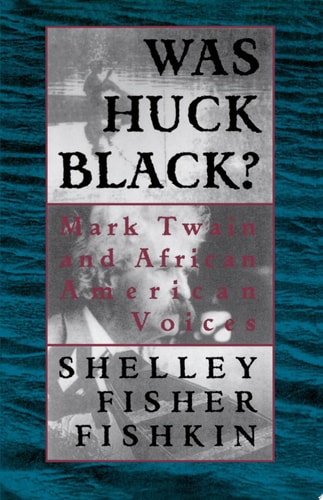
Was Huck Black?: Mark Twain and African-American Voices
0
0
As an Amazon Associate and affiliate partner, Menrva Books earns from qualifying purchases. Learn more
Author Description
Ernest Hemingway asserted, "All modern American literature comes from one book by Mark Twain called Huckleberry Finn." Lionel Trilling said the novel was "not less than definitive in American literature." Published in 1884, Huck Finn has become one of the most widely taught novels in American curricula. But where did Huckleberry Finn come from, and what made it so distinctive? Shelley Fisher Fishkin suggests that in Huckleberry Finn, more than in any other work, Mark Twain let African-American voices, language, and rhetorical traditions play a major role in the creation of his art. In Was Huck Black?, Fishkin combines close readings of published and unpublished writing by Twain with intensive biographical and historical research and insights gleaned from linguistics, literary theory, and folklore to shed new light on the role African-American voices played in the genesis of Huckleberry Finn. Given that book's importance in American culture, her analysis illuminates, as well, how African-American voices have shaped our sense of what is distinctively "American" about American literature. Fishkin shows that Mark Twain was surrounded, throughout his life, by richly talented African-American speakers whose rhetorical gifts Twain admired candidly and profusely. A black child named Jimmy whom Twain called "the most artless, sociable and exhaustless talker I ever came across" helped Twain understand the potential of a vernacular narrator in the years before he began writing Huckleberry Finn, and served as a model for the voice with which Twain would transform American literature. A slave named Jerry whom Twain referred to as an "impudent and satirical and delightful young black man" taught Twain about "signifying"—satire in an African-American vein—when Twain was a teenager (later Twain would recall that he thought him "the greatest man in the United States" at the time). Other African-American voices left their mark on Twain's imagination as well—but their role in the cr
Menrva's Summary
THE THESIS
This book investigates the extent to which African-American vernacular, rhetorical traditions, and specific individuals influenced the creation of Mark Twain's seminal novel, Adventures of Huckleberry Finn. Shelley Fisher Fishkin, a scholar of American literature, utilizes a combination of archival research, linguistic analysis, and biographical study to challenge traditional interpretations of Twain's creative process. By examining both published texts and unpublished manuscripts, she argues that Twain's artistic development was deeply intertwined with his exposure to the speech patterns and storytelling styles of African-American figures from his youth.
THE SCOPE MAP
What You Will Find
- Analysis of the linguistic roots of Huckleberry Finn's narrative voice.
- Biographical profiles of African-American individuals who influenced Twain's development.
- Examination of the rhetorical tradition of 'signifying' in American literature.
- Integration of literary theory and historical context to re-evaluate the American literary canon.
THE AUTHORITY PERSPECTIVE
Scholars and critics frequently cite this work as a significant contribution to the understanding of racial dynamics in American literary history. Readers often note the academic rigor of the prose, which provides a detailed, evidence-based challenge to long-standing assumptions about Twain's creative influences.
Page Count:
288
Publication Date:
1994-01-01
Publisher:
Oxford University Press USA
ISBN-10:
0199728755
ISBN-13:
9780199728756
History
Biography
Politics
African Americans
English
American
Kindle eBooks
Ethnic Studies
Kindle Store
English & College Success
Literary Criticism
Categories
Community Tags
Other Editions(2)
Similar Books






Reader Comments
Share Your Thoughts
No comments yet. Be the first to share your thoughts!