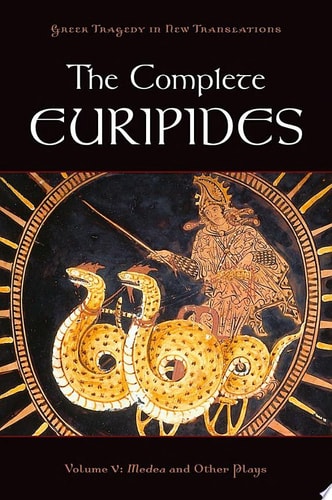
Herakles (Greek Tragedy in New Translations)
0
0
As an Amazon Associate and affiliate partner, Menrva Books earns from qualifying purchases. Learn more
Author Description
In Herakles, Euripides reveals with great subtlety and complexity the often brutal underpinnings of our social arrangements. The play enacts a thoroughly contemporary dilemma about the relationship between personal and state violence to civic order. Of all of Euripides' plays, this is his most skeptically subversive examination of myth, morality, and power. Depicting Herakles slowly going mad by Hera, the wife of Zeus, this play continues to haunt and inspire readers. Hera hates Herakles because he is one of Zeus' children born of adultery, and in his madness, Herakles is driven to murder his own wife and children and is eventually exiled, by his own accord, to Athens. This new volume includes a fresh translation, an updated introduction, detailed notes on the text, and a thorough glossary.
Menrva's Summary
THE PULSE
The central conflict ignites when the goddess Hera strikes the hero Herakles with a divine madness, forcing him to confront the catastrophic consequences of his own uncontrollable violence. Herakles, a legendary figure defined by his strength and service, finds his objective of domestic peace shattered by the machinations of a vengeful deity. The play explores the tension between individual agency and the arbitrary cruelty of the gods, set against the rigid social structures of ancient Greek civic life. The narrative unfolds through the formal conventions of Attic tragedy, utilizing dialogue and choral odes to examine the protagonist's descent into ruin and his subsequent search for redemption.
INSIDE THE PAGES
- Utilization of the traditional Greek chorus to provide moral commentary and emotional framing.
- Exploration of the intersection between divine intervention and human psychological collapse.
- Examination of the fragility of civic order when confronted with personal trauma.
- Use of dramatic irony to heighten the tension surrounding the protagonist's past achievements.
- Structural focus on the transition from heroic triumph to domestic tragedy.
- Incorporation of philosophical inquiries into the nature of morality and power.
- Deployment of stichomythia to sharpen the conflict between key characters.
- Inclusion of scholarly apparatus including an introduction, notes, and a glossary.
THE COLLECTIVE ECHO
Readers and critics frequently highlight the play's unsettling portrayal of a hero stripped of his agency by divine whim. Discussion often centers on the stark contrast between the traditional image of Herakles as a savior and his role as a perpetrator of domestic violence. Scholars note that the work remains a focal point for debates regarding the subversion of mythological tropes in classical drama. The pacing is often described as deliberate, allowing the audience to witness the slow erosion of the protagonist's sanity before the final, devastating climax. Many find the play's interrogation of state and personal violence to be particularly relevant to contemporary discussions on power and accountability.
Page Count:
128
Publication Date:
2001-01-01
Publisher:
Oxford University Press
ISBN-10:
0199727805
ISBN-13:
9780199727803
Drama
Theatre
Special Topics
Mythology
Humanities
Classical
Plays
Greek Tragedy