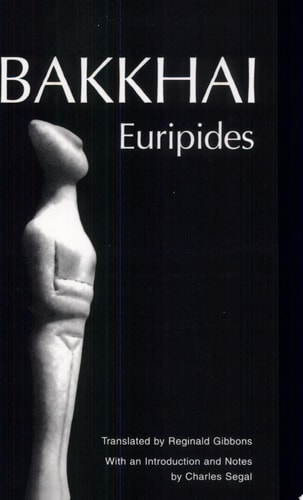
Bakkhai: Euripides (Greek Tragedy in New Translations)
0
0
As an Amazon Associate and affiliate partner, Menrva Books earns from qualifying purchases. Learn more
Author Description
Regarded by many as Euripides' masterpiece, Bakkhai is a powerful examination of religious ecstasy and the resistance to it. A call for moderation, it rejects the temptation of pure reason as well as pure sensuality, and is a staple of Greek tragedy, representing in structure and thematics an exemplary model of the classic tragic elements. Disguised as a young holy man, the god Bacchus arrives in Greece from Asia proclaiming his godhood and preaching his orgiastic religion. He expects to be embraced in Thebes, but the Theban king, Pentheus, forbids his people to worship him and tries to have him arrested. Enraged, Bacchus drives Pentheus mad and leads him to the mountains, where Pentheus' own mother, Agave, and the women of Thebes tear him to pieces in a Bacchic frenzy. Gibbons, a prize-winning poet, and Segal, a renowned classicist, offer a skilled new translation of this central text of Greek tragedy.
Menrva's Summary
THE PULSE
The god Bacchus arrives in Thebes to demand recognition of his divinity, triggering a violent confrontation with the city's ruler, Pentheus. The protagonist, Pentheus, attempts to maintain civic order and rational control against the encroaching influence of a new, ecstatic religious movement. Bacchus, operating from a position of divine authority, manipulates the king's perceptions and psychological state to orchestrate his downfall. The narrative follows a classic Greek tragic structure, utilizing a chorus to comment on the unfolding events as the conflict escalates toward a gruesome, inevitable conclusion.
INSIDE THE PAGES
- Use of the traditional Greek chorus to provide moral and social commentary
- Exploration of the tension between rationalism and irrational religious fervor
- Deployment of dramatic irony as the god manipulates the mortal king
- Structural adherence to the unities of time, place, and action
- Examination of the destructive nature of unchecked hubris
- Vivid depiction of ritualistic frenzy and divine retribution
- Characterization of the antagonist as a rigid defender of civic law
- Integration of mythological elements to explore human psychological limits
THE COLLECTIVE ECHO
Readers and critics frequently highlight the play's unsettling examination of religious extremism and the fragility of human reason. Discussion often centers on the complex characterization of Pentheus and whether he represents a necessary defense of order or a tragic failure of empathy. The translation by Gibbons and Segal is noted for its accessibility, maintaining the rhythmic intensity required for performance while clarifying the dense thematic layers of the original text. Scholars often point to the work as a definitive example of how ancient tragedy functions as a mirror for contemporary societal anxieties regarding authority and belief.
Page Count:
128
Publication Date:
2001-01-01
Publisher:
Oxford University Press
ISBN-10:
0199880816
ISBN-13:
9780199880812
Drama
Humanities
Mythology
Plays
Theatre
Special Topics
Classical
Greek Tragedy