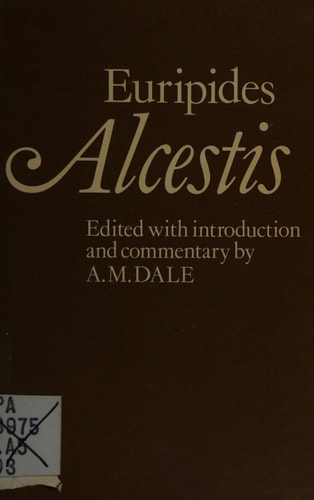
Alcestis
0
0
As an Amazon Associate and affiliate partner, Menrva Books earns from qualifying purchases. Learn more
Author Description
Alcestis is a tragedy by the ancient Greek playwright Euripides. It was first produced at the City Dionysia in 438 BC. It is the oldest of Euripides' plays that has survived. The play tells the story of Alcestis, who agrees to die in place of her husband, Admetus, the King of Pherae. When the god Apollo learns that Admetus is destined to die, he convinces the Fates to allow someone else to take his place. Alcestis is the only one willing to do so.
Menrva's Summary
THE PULSE
Admetus, King of Pherae, faces the imminent death of his wife, Alcestis, who has volunteered to die in his place to satisfy a debt to the gods. The protagonist must navigate the profound grief of his household and the arrival of Heracles, whose boisterous presence contrasts with the mourning atmosphere of the palace. The narrative follows the tension between the king's hospitality toward his guest and the internal collapse of his family structure. Euripides employs a structure that blends elements of tragedy with the lighter, often jarring conventions of a satyr play, challenging traditional expectations of heroic behavior.
INSIDE THE PAGES
- Exploration of the social obligations of xenia, or guest-friendship.
- Examination of the gendered expectations of sacrifice and duty in ancient Greece.
- Use of a chorus to provide moral commentary and emotional framing for the audience.
- Juxtaposition of high-stakes mortality with comedic or lighthearted character interactions.
- The intervention of divine figures and mythological heroes in human affairs.
- Focus on the psychological interiority of a husband mourning his wife's self-sacrifice.
- The use of stichomythia to heighten the tension during key confrontational dialogues.
- A resolution that emphasizes the restoration of the domestic order through supernatural intervention.
THE COLLECTIVE ECHO
Discussion often centers on the ambiguous characterization of Admetus, whose acceptance of his wife's sacrifice frequently invites intense debate regarding his moral standing. Readers frequently highlight the play's tonal shifts, noting how the intrusion of Heracles into a house of mourning creates a unique, often uncomfortable dramatic friction. Scholars often focus on the subversion of traditional tragic tropes, as the play concludes with a reunion rather than the typical total destruction of the house. The work remains a primary subject for those interested in the evolution of Greek drama and the complexities of ancient social codes.
Page Count:
172
Publication Date:
1978-05-18
Publisher:
Oxford University Press
ISBN-10:
0198720971
ISBN-13:
9780198720973
Drama
Mythology
Dramatic works
Plays
Greek Tragedy
Classical
Community Tags
Other Editions(17)
Phoemixx Classics Ebooks
2021
Default edition
Alpha Editions
2021
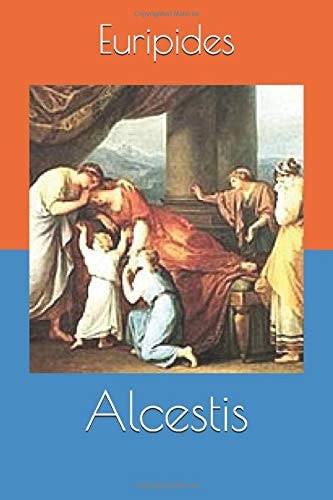
Independently Published
2019
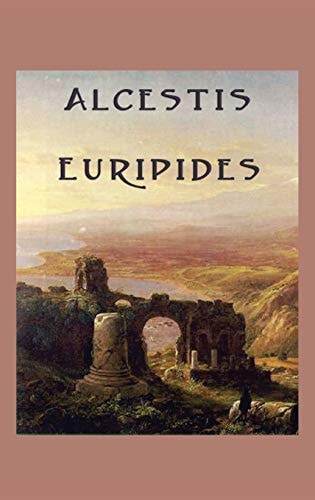
Wilder Publications, Incorporated
2018
CreateSpace Independent Publishing Platform
2018
CreateSpace Independent Publishing Platform
2017
CreateSpace Independent Publishing Platform
2017

Editorial Minimal
2015
Simon & Schuster
2013

Nabu Press
2010

Hard Press
2006
Digireads.com
2006

De Gruyter
1998
Oxford University Press
1990
Oxford University Press
1978
Prentice-Hall
1974

Unwin Hyman
1915




Reader Comments
Share Your Thoughts
No comments yet. Be the first to share your thoughts!