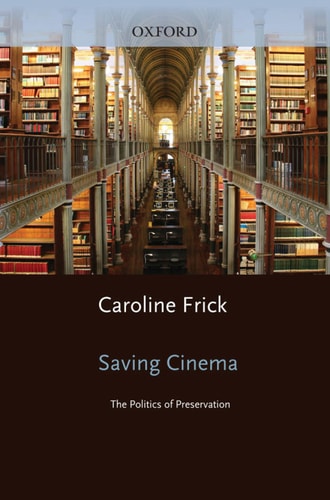
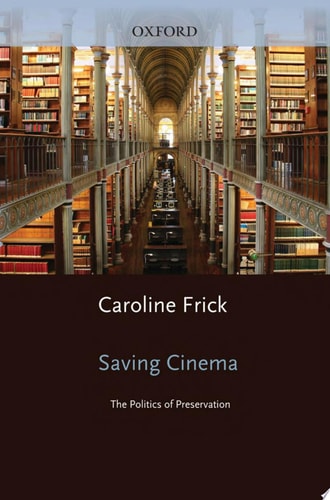
Saving Cinema: The Politics of Preservation
0
0
As an Amazon Associate and affiliate partner, Menrva Books earns from qualifying purchases. Learn more
Author Description
The importance of media preservation has in recent years achieved much broader public recognition. From the vaults of Hollywood and the halls of Congress to the cash-strapped museums of developing nations, people are working to safeguard film from physical harm. But the forces at work aren't just physical. The endeavor is also inherently political. What gets saved and why? What remains ignored? Who makes these decisions, and what criteria do they use? Saving Cinema narrates the development of the preservation movement and lays bare the factors that have influenced its direction. Archivists do more than preserve movie history; they actively produce and codify cinematic heritage. At the same time, digital technologies have produced an entirely new reality, one that resists the material, artifact-driven approach that is the gold standard of preservation in the Western world. As it has become increasingly easy to capture and access moving images, increasing evidence of something many archivists have known for years has emerged: industrial and training films, amateur travel diaries, and even family videos are critical public resources. It has also raised question about the role of the profession. Is access equivalent to preservation, and, if it is, how should archivists alter their activities? The time is ripe for a reconsideration of the politics and practices of preservation. Saving Cinema is the book to guide that conversation.
Menrva's Summary
THE THESIS
This book investigates the political dimensions of film preservation, questioning how institutional power and cultural values dictate which cinematic artifacts are saved and which are discarded. Caroline Frick, a scholar and professional in the field of media archives, examines the historical development of the preservation movement. She argues that archivists are not neutral custodians but active participants in the construction of cinematic heritage, often influenced by Western-centric standards and industrial priorities. The text evaluates how digital technologies challenge traditional material-based preservation methods and force a re-evaluation of what constitutes a valuable public resource.
THE SCOPE MAP
What You Will Find
- Historical analysis of the film preservation movement from its inception to the digital age.
- Examination of the power dynamics between Hollywood, government institutions, and independent archives.
- Discussion of the shift from physical artifact-driven preservation to digital accessibility.
- Evaluation of the cultural value assigned to amateur, industrial, and non-commercial film formats.
THE AUTHORITY PERSPECTIVE
Experts in film studies and archival science identify this work as a critical examination of the institutional biases inherent in media curation. Scholars frequently cite the text for its clear articulation of the tension between traditional preservation standards and the realities of the digital era.
Page Count:
230
Publication Date:
2011-01-01
Publisher:
Oxford University Press
ISBN-10:
019979264X
ISBN-13:
9780199792641
Non-Fiction
Politics
History
Media Studies
Film Studies
Community Tags
Other Editions(2)
Similar Books