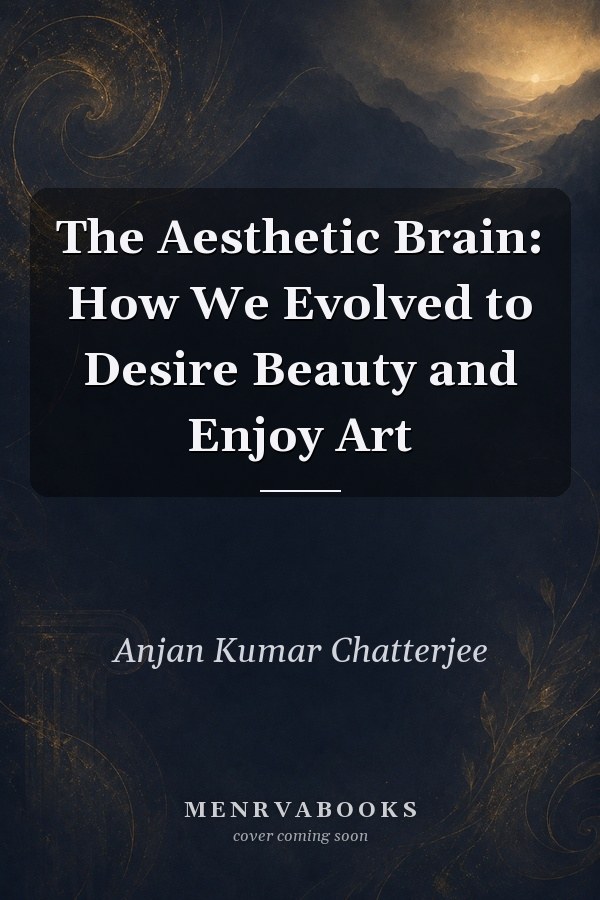
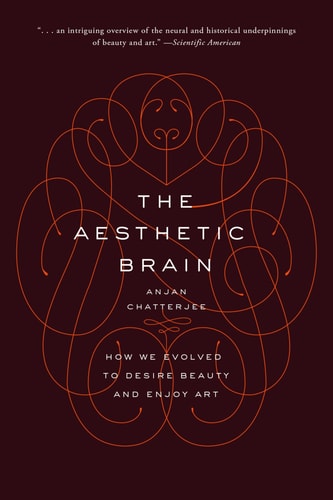
The Aesthetic Brain: How We Evolved to Desire Beauty and Enjoy Art
0
0
As an Amazon Associate and affiliate partner, Menrva Books earns from qualifying purchases. Learn more
Author Description
The Aesthetic Brain takes the reader on a wide-ranging journey through the world of beauty, pleasure, and art. Chatterjee uses neuroscience to probe how an aesthetic sense is etched in our minds and evolutionary psychology to explain why aesthetic concerns feature centrally in our lives. Along the way, Chatterjee addresses fundamental questions: What is beauty? Is beauty universal? How is beauty related to pleasure? What is art? Should art be beautiful? Do we have an instinct for art? Chatterjee starts by probing the reasons that we find people, places, and even numbers beautiful. At the root of beauty, he finds, is pleasure. He then examines our pleasures by dissecting why we want and why we like food, sex, and money and how these rewards relate to aesthetic encounters. His ruminations on beauty and pleasure prepare him and the reader to face art. He wanders through the problems of defining art, understanding contemporary art, and interpreting ancient art. He explores why art, something that seems so useless, also feels fundamental to our humanity. Replete with facts, anecdotes, and analogies, this empirical guide to aesthetics offers scientific answers without deflating the wonders of beauty and art.
Menrva's Summary
THE THESIS
This book investigates the biological and evolutionary origins of human aesthetic experience, questioning why beauty and art remain central to our existence. Anjan Kumar Chatterjee, a neurologist and professor, utilizes current neuroscientific research and evolutionary psychology to construct a framework for understanding how the brain processes aesthetic stimuli. He argues that our appreciation for beauty is not merely a cultural construct but is deeply rooted in the neural mechanisms that govern pleasure, reward, and survival.
THE SCOPE MAP
What You Will Find
- Neurobiological mechanisms linking aesthetic appreciation to pleasure and reward systems.
- Evolutionary theories explaining the adaptive value of beauty in human development.
- Comparative analysis of how the brain processes natural beauty versus human-created art.
- Philosophical inquiries into the definitions of art and the universality of aesthetic standards.
THE AUTHORITY PERSPECTIVE
Experts and readers frequently cite this work as a highly accessible bridge between hard neuroscience and the humanities. The text is noted for its ability to maintain scientific rigor while addressing abstract questions about the nature of human creativity and perception.
Page Count:
0
Publication Date:
2013-01-01
Publisher:
Oxford University Press, Incorporated
ISBN-10:
0199811873
ISBN-13:
9780199811878
Science
Philosophy
Psychology
Evolutionary Psychology
Neuroästhetik
Cognitive Psychology
Brain
Neuroscience
Neuroaesthetics
Psychological aspects
Pleasure
Physiology
Esthetics
Evolution
Art History
Community Tags
Other Editions(2)
Similar Books