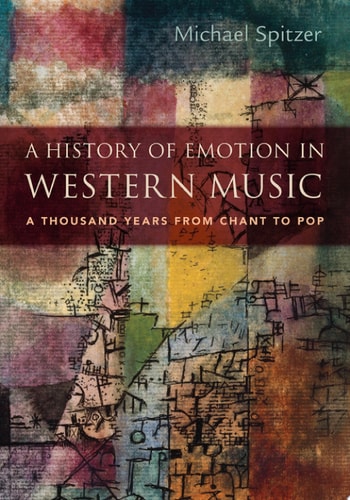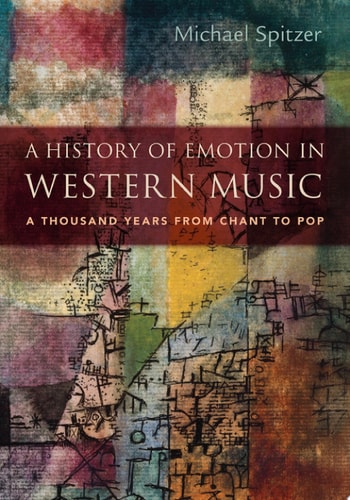
A History of Emotion in Western Music
0
0
As an Amazon Associate and affiliate partner, Menrva Books earns from qualifying purchases. Learn more
Author Description
When Asked To Describe What Music Means To Them, Most People Talk About Its Power To Express Or Elicit Emotions. As A Melody Can Produce A Tear, Tingle The Spine, Or Energize Athletes, Music Has A Deep Impact On How We Experience And Encounter The World. Because Of The Elusiveness Of These Musical Emotions, However, Little Has Been Written About How Music Creates Emotions And How Musical Emotion Has Changed Its Meaning For Listeners Across The Last Millennium. In This Sweeping Landmark Study, Author Michael Spitzer Provides The First History Of Musical Emotion In The Western World, From Gregorian Chant To Beyoncé. Combining Intellectual History, Music Studies, Philosophy, And Cognitive Psychology, A History Of Emotion In Western Music Introduces Current Approaches To The Study Of Emotion And Formulates An Original Theory Of How Musical Emotion Works. Diverging From Psychological Approaches That Center Listeners' Self-reports Or Artificial Experiments, Spitzer Argues That Musical Emotions Can Be Uncovered In The Techniques And Materials Of Composers And Performers. Together With Its Extensive Chronicle Of The Historical Evolution Of Musical Style And Emotion, This Book Offers A Rich Union Of Theory And History.
Menrva's Summary
THE THESIS
This book investigates the historical evolution of musical emotion in the Western world, seeking to understand how music creates emotional experiences and how those meanings have shifted over the last millennium. Michael Spitzer, a scholar in music studies, synthesizes intellectual history, philosophy, and cognitive psychology to construct a new theoretical framework. He argues that musical emotion is embedded within the technical materials and compositional strategies of music itself, rather than relying solely on listener self-reports or laboratory experiments.
THE SCOPE MAP
What You Will Find
- A chronological analysis of Western music from Gregorian chant to contemporary pop artists like Beyoncé.
- A theoretical model for interpreting emotional expression through musical techniques and performance materials.
- An interdisciplinary synthesis of musicology, philosophy, and cognitive science.
Scope Limits
- The study focuses primarily on the Western musical tradition and does not provide a global or cross-cultural history of musical emotion.
- The text prioritizes technical and historical analysis over anecdotal or purely subjective listener experiences.
THE AUTHORITY PERSPECTIVE
Experts and musicologists recognize this work as a significant contribution to the field of music history for its ambitious scope and interdisciplinary methodology. Readers frequently note the academic density of the prose, which requires a foundational understanding of music theory to fully appreciate the author's arguments.
Page Count:
416
Publication Date:
2020-01-01
Publisher:
Oxford University Press
ISBN-10:
0190061766
ISBN-13:
9780190061760
Philosophy
Non-Fiction
Cognitive Psychology
Music History
Cultural History
Musicology
Community Tags
Other Editions(2)

Similar Books