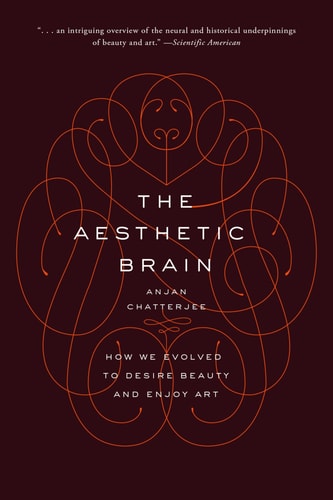
The Aesthetic Brain: How We Evolved to Desire Beauty and Enjoy Art
0
0
As an Amazon Associate and affiliate partner, Menrva Books earns from qualifying purchases. Learn more
Author Description
The Aesthetic Brain takes readers on an exciting journey through the world of beauty, pleasure, and art. Using the latest advances in neuroscience and evolutionary psychology, Anjan Chatterjee investigates how an aesthetic sense is etched into our minds, and explains why artistic concerns feature centrally in our lives. Along the way, Chatterjee addresses such fundamental questions as: What is beauty? Is it universal? How is beauty related to pleasure? What is art? Should art be beautiful? Do we have an instinct for art?Early on, Chatterjee probes the reasons why we find people, places, and even numbers beautiful, highlighting the important relationship between beauty and pleasure. Examining our pleasures allows him to reveal why we enjoy things like food, sex, and money, and how these rewards relate to our aesthetic encounters. Chatterjee's detailed discussion of beauty and pleasure equips readers to confront essential questions about the nature of art, the problems of defining it, and the challenges of interpreting its modern, non-traditional forms. Replete with facts, anecdotes, and analogies, this lively empirical guide to aesthetics offers scientific answers to fundamental questions without deflating the intrinsic wonders of beauty and art in an affordable paperback edition.
Menrva's Summary
THE THESIS
This book investigates the biological and evolutionary origins of the human aesthetic sense and the neurological mechanisms that underpin our experience of beauty. Anjan Kumar Chatterjee, a neurologist and professor, synthesizes findings from evolutionary psychology and neuroscience to construct a framework for understanding why humans prioritize aesthetic experiences. He argues that our capacity for beauty is not merely a cultural construct but an ingrained feature of the human mind linked to fundamental reward systems.
THE SCOPE MAP
What You Will Find
- Neurological basis of pleasure and reward systems
- Evolutionary explanations for preferences in faces, landscapes, and objects
- Analysis of the relationship between biological drives and artistic appreciation
- Philosophical inquiries into the definition and function of art
Scope Limits
- Does not provide a comprehensive history of art movements
- Does not offer a prescriptive guide for creating art
THE AUTHORITY PERSPECTIVE
Experts in cognitive science and aesthetics frequently cite this work as a clear, accessible bridge between hard science and the humanities. Readers often note that the prose remains readable for a general audience while maintaining the rigor expected of an empirical study.
Page Count:
248
Publication Date:
2015-09-01
Publisher:
Oxford University Press
ISBN-10:
019026201X
ISBN-13:
9780190262013
Psychology
Neuroscience
Art Theory
Evolutionary Psychology
Aesthetics
Community Tags
Other Editions(2)
Similar Books