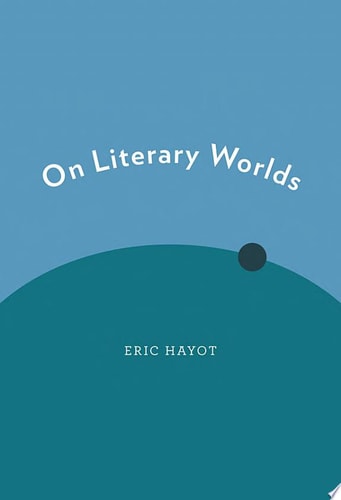
On Literary Worlds
0
0
As an Amazon Associate and affiliate partner, Menrva Books earns from qualifying purchases. Learn more
Author Description
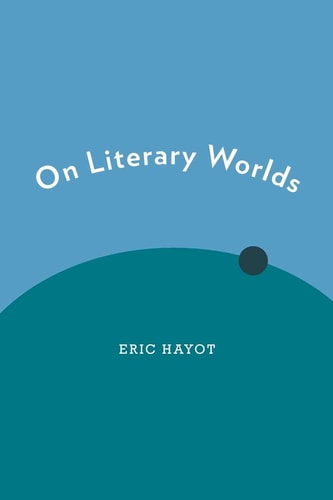
Although literature is not a technology, the historical models literary scholars use to describe it owe a great deal to the languages of originality, novelty, progress, and invention that characterize technological development. However this quintessentially modern mindset--putting progress at the center of historicity--makes it difficult for anyone eager to mount a case for why someone interested in the history of modern literary aesthetics ought to read the literature of the non-Western world.In this groundbreaking book, Eric Hayot argues that contemporary debates about world literature and world literary systems can be rethought through an attention to the world-creating force of aesthetic objects. As he rethinks from the ground up our concepts of literary progress and historicity, Hayot re-describes the history of modern literature as we know it (or as we think we know it), developing new concepts and new formal languages to describe the aesthetic "physics" of the socially and imaginatively possible. Connecting this physics to historical shifts in world-view ranging from Copernicus to Marx, Don Quijote to Battlestar Galactica, On Literary Worlds shows how the very notion of the modern is, at heart, a cosmographical social form, and opens vast new directions for the future analysis of the activity and force of literature.
Menrva's Summary
THE THESIS
How can the study of world literature move beyond Western-centric models of progress and technological invention to better account for the aesthetic force of literary objects? Eric Hayot, a scholar of comparative literature, challenges the traditional historical frameworks that equate literary development with technological advancement. By proposing a new conceptual vocabulary, he argues that literature functions as a cosmographical social form that shapes our understanding of the modern world through its unique aesthetic physics.
THE SCOPE MAP
What You Will Find
- A critique of modern historical models that prioritize progress and novelty in literary analysis.
- The development of a new formal language to describe the aesthetic physics of literary worlds.
- Comparative analysis ranging from early modern literature like Don Quijote to contemporary science fiction such as Battlestar Galactica.
- A theoretical framework connecting literary aesthetics to broader historical shifts in world-view from Copernicus to Marx.
THE AUTHORITY PERSPECTIVE
Scholars and critics frequently note the high level of theoretical density in Hayot's prose, which demands a strong background in literary theory. Experts highlight this work as a significant contribution to the field of world literature, particularly for its attempt to bridge the gap between aesthetic form and historical cosmography.
Page Count:
224
Publication Date:
2012-11-05
Publisher:
Oxford University Press
ISBN-10:
0199926697
ISBN-13:
9780199926695
Philosophy
Literary Criticism
World Literature
Literary theory
Aesthetics