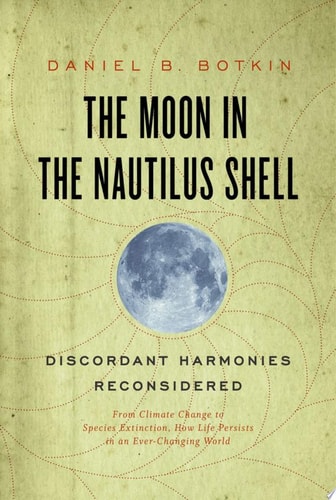
The Moon in the Nautilus Shell
0
0
As an Amazon Associate and affiliate partner, Menrva Books earns from qualifying purchases. Learn more
Author Description
Why Do We Keep Talking About So Many Environmental Problems And Rarely Solve Any? If These Are Scientific Issues, Then Why Can't Scientists Solve Them Or At Least Agree On What To Do? In His New Book, The Moon In The Nautilus Shell, Ecologist Daniel Botkin Explains Why. For One Thing, Although We Live In A World Of Constantly Changing Environments And Talk A Lot About Climate Change, Most Of Our Environmental Laws, Policies, And Scientific Premises Are Based On The Idea That The Environment Is Constant, Never Changing, Except When People Affect It. For Another, We Have Lost Contact With Nature In Personal Ways. Disconnected From Our Surroundings, We Lack The Deep Understanding And Feelings About The Environment To Make Meaningful Judgments. The Environment Has Become Just Another One Of Those Special Interests That Interferes With Our Lives. Poised To Be A Core Text Of The Twenty-first Century Environmental Movement, The Moon In The Nautilus Shell Challenges Us To Think Critically About Our Role In Nature.
Menrva's Summary
THE THESIS
This book investigates the fundamental disconnect between static environmental policy and the reality of a dynamic, ever-changing natural world. Ecologist Daniel B. Botkin draws upon decades of field research and historical analysis to argue that modern environmentalism is hindered by the outdated belief that nature exists in a state of equilibrium. He posits that by clinging to the myth of a constant environment, society fails to create effective policies, ultimately suggesting that a new, dynamic perspective is required to address contemporary ecological challenges.
THE SCOPE MAP
What You Will Find
- Analysis of the 'nature as constant' paradigm in current environmental legislation.
- Historical case studies illustrating the inherent variability of ecosystems.
- Critique of the modern societal detachment from direct, personal engagement with the natural world.
- Proposed frameworks for integrating ecological change into future conservation strategies.
THE AUTHORITY PERSPECTIVE
Experts recognize this work as a significant critique of traditional conservation biology and policy-making. Readers frequently note the accessible yet provocative nature of the prose, which challenges foundational assumptions held by both scientists and the general public.
Page Count:
448
Publication Date:
2012-01-01
Publisher:
Oxford University Press
ISBN-10:
0199976872
ISBN-13:
9780199976874
Science
Nature
Ecology
Community Tags
Similar Books