Photography
0
0
As an Amazon Associate and affiliate partner, Menrva Books earns from qualifying purchases. Learn more
Author Description
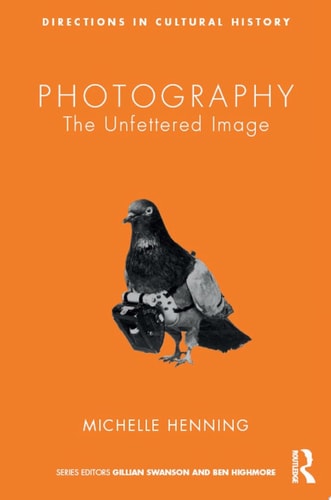
We live in a time in which photographs have become extraordinarily mobile. They can be exchanged and circulated at the swipe of a finger across a screen. The digital photographic image appears and disappears with a mere gesture of the hand. Yet, this book argues that this mobility of the image was merely accelerated by digital media and telecommunications. Photographs, from the moment of their invention, set images loose by making them portable, reproducible, projectable, reduced in size and multiplied. The fact that we do not associate analogue photography with such mobility has much to do with the limitations of existing histories and theories of photography, which have tended to view photographic mobility as either an incidental characteristic or a fault. Photography: The Unfettered Image traces the emergence of these ways of understanding photography, but also presents a differently nuanced and materialist history in which photography is understood as part of a larger development of media technologies. It is situated in much broader cultural contexts: caught up in the European colonial ambition to "grasp the world" and in the development of a new, artificial "second nature" dependent on the large-scale processing of animal and mineral materials. Focussing primarily on Victorian and 1920s–30s practices and theories, it demonstrates how photography was never simply a technology for fixing a fleeting reality.
Menrva's Summary
THE THESIS
This book challenges conventional understandings of photographic mobility, arguing that its roots lie in the medium's analog origins, not solely in digital acceleration. The author posits that from its inception, photography was designed for portability, reproducibility, and dissemination, a characteristic often overlooked by existing historical and theoretical frameworks. By examining Victorian and 1920s-30s practices, the work situates photography within broader contexts of media technologies, European colonial ambitions, and the development of an artificial 'second nature' reliant on material processing, revealing it as more than just a tool for capturing fleeting reality.
THE SCOPE MAP
- An argument for the inherent mobility of analog photographs from their invention.
- A critique of traditional histories and theories of photography that downplay analog mobility.
- An examination of photography's role in European colonial expansion.
- An analysis of photography's connection to the development of artificial 'second nature' through material processing.
- Focus on photographic practices and theories from the Victorian era and the 1920s-30s.
- A materialist history of photography as part of broader media technological developments.
THE AUTHORITY PERSPECTIVE
The book presents a materialist history of photography, emphasizing its inherent mobility from its analog beginnings and challenging the notion that this is a purely digital phenomenon. It situates photographic practices within wider cultural and technological contexts, including colonial ambitions and the processing of natural materials. The work aims to provide a more nuanced understanding of photography's historical development and its relationship with media technologies. The author's focus on specific historical periods suggests a detailed and analytical approach to the subject.
Page Count:
218
Publication Date:
2023-01-06
Publisher:
Taylor & Francis
ISBN-10:
1000887790
ISBN-13:
9781000887792
Non-Fiction
Photography
History
Art
Victorian Era
Media Studies
Community Tags
Similar Books