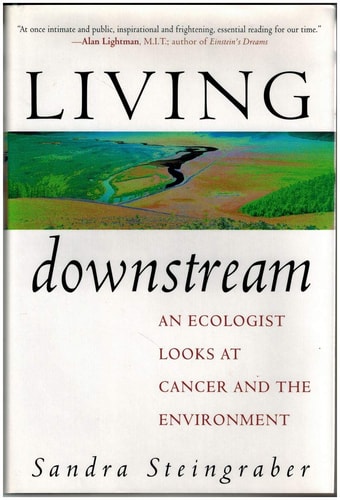
Living Downstream: An Ecologist Looks At Cancer And The Environment
0
0
As an Amazon Associate and affiliate partner, Menrva Books earns from qualifying purchases. Learn more
Author Description
Sandra Steingraber, biologist, poet, and survivor of cancer in her twenties, brings all three perspectives to bear on the most important health and human rights issue of our time: the growing body of evidence linking cancer to environmental contaminations. Her scrupulously researched scientific analysis ranges from the alarming worldwide patterns of cancer incidence to the sabotage wrought by cancer-promoting substances on the intricate workings of human cells. In a gripping personal narrative, she travels from hospital waiting rooms to hazardous waste sites and from farmhouse kitchens to incinerator hearings, bringing to life stories of communities in her hometown and around the country as they confront decades of industrial and agricultural recklessness. Living Downstream is the first book to bring together toxics-release data—now finally made available through under the right-to-know laws—and newly released cancer registry data. Sandra Steingraber is also the first to trace with such compelling precision the entire web of connections between our bodies and the ecological world in which we eat, drink, breathe, and work. Her book strikes a hopeful note throughout, for, while we can do little to alter our genetic inheritance, we can do a great deal to eliminate the environmental contributions to cancer, and she shows us where to begin. Living Downstream is for all readers who care about the health of their families and future generations. Sandra Steingraber's brave, clear, and careful voice is certain to break the paralyzing silence on this subject that persists more than three decades after Rachel Carson's great early warning.
Menrva's Summary
THE THESIS
This work investigates the causal links between environmental contamination and the rising incidence of cancer in human populations. Sandra Steingraber, a biologist and cancer survivor, synthesizes epidemiological data with personal narrative to argue that industrial and agricultural pollutants are significant, preventable contributors to cancer. She utilizes her dual background in science and literature to construct a framework that connects cellular biology with public health policy and environmental justice.
THE SCOPE MAP
What You Will Find
- Analysis of toxics-release data and cancer registry statistics.
- Examination of the biological mechanisms by which carcinogens disrupt human cellular function.
- Case studies of communities confronting industrial and agricultural pollution.
- A framework for understanding the intersection of human health and ecological integrity.
THE AUTHORITY PERSPECTIVE
Experts and readers frequently cite this work as a foundational text that bridges the gap between complex environmental science and public health advocacy. The prose is noted for its clarity and rigorous adherence to scientific data while maintaining a strong, accessible narrative voice.
Page Count:
357
Publication Date:
1997-05-20
Publisher:
Addison-Wesley
ISBN-10:
0201483033
ISBN-13:
9780201483031
Science
Health
Non-Fiction
Environment
Ecology
Women
Public Policy
Community Tags
Similar Books