Ivan Pavlov: Exploring the Animal Machine
0
0
As an Amazon Associate and affiliate partner, Menrva Books earns from qualifying purchases. Learn more
Author Description
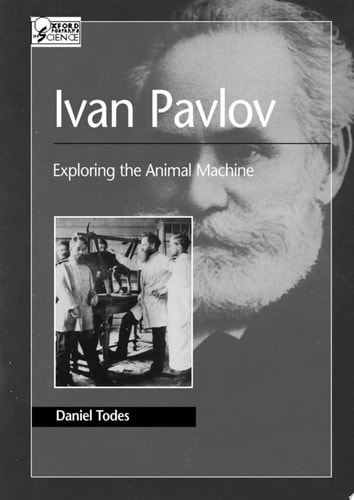
Hailed as the "Prince of World Physiology," Ivan Pavlov continues to influence scientists today. His pioneering research on digestion, the brain, and behavior still provides important insights into the minds of animals--including humans--and is an inspiring example of imaginative experimental technique. Pavlov graduated from the theological seminary in his native Ryazan, Russia, in 1869 but almost immediately switched to medicine and enrolled at St. Petersburg University. He became interested in the physiology of circulation and digestion, which led him to the study of conditional and unconditional reflexes. He conducted thousands of experiments with dogs, developing a way to use a dogs salivary glands as a window through which to observe the workings of its brain.Pavlov lived through the Russian Revolution and the civil war that followed it. Lenin himself recognized his genius and provided financial backing for his research; the new Soviet government built a research complex dedicated exclusively to his experiments. Pavlov was honored for his contributions to science with the Nobel Prize for Physiology in 1904. Oxford Portraits in Science is an ongoing series of scientific biographies for young adults. Written by top scholars and writers, each biography examines the personality of its subject as well as the thought process leading to his or her discoveries. These illustrated biographies combine accessible technical information with compelling personal stories to portray the scientists whose work has shaped our understanding of the natural world.
Menrva's Summary
THE THESIS
How did Ivan Pavlov’s rigorous experimental methodology and transition from theology to physiology redefine the scientific understanding of animal behavior and reflexology? Daniel P. Todes, a scholar of Russian scientific history, utilizes primary source materials and historical context to examine Pavlov’s trajectory from a seminary student to a Nobel Prize-winning physiologist. The book argues that Pavlov’s success stemmed from his imaginative experimental techniques, particularly his use of canine subjects to map the physiological processes of digestion and the brain. By situating Pavlov within the turbulent political landscape of the Russian Revolution, the text illustrates how his work maintained scientific integrity despite significant societal upheaval.
THE SCOPE MAP
What You Will Find
- A detailed account of Pavlov’s early life in Ryazan and his academic transition to St. Petersburg University.
- An explanation of the physiological mechanisms behind conditional and unconditional reflexes.
- Historical analysis of the relationship between Pavlov and the Soviet government, including Lenin’s support for his research.
Scope Limits
- The text does not provide an exhaustive technical manual on modern behavioral psychology or contemporary neurobiology.
- It does not cover the entirety of 20th-century Russian political history, focusing only on events directly impacting Pavlov’s laboratory.
THE AUTHORITY PERSPECTIVE
Experts and educators recognize this work as a highly accessible entry point into the history of science for younger readers. The narrative is frequently praised for its ability to balance complex physiological concepts with the personal and political challenges faced by its subject.
Page Count:
109
Publication Date:
2000-01-01
Publisher:
Oxford University Press
ISBN-10:
0190283009
ISBN-13:
9780190283001
Biography
Non-Fiction
Psychology
Science
Physiology
English
Science History
English & College Success
Physiologists
Community Tags
Similar Books